Upstream Performance Marketing: The Publisher’s Guide to Pre-Search Discovery and Monetization

Digital marketing is evolving as consumers discover brands, news, and products through pre-search discovery long before they type a search query or visit a traditional search engine. This shift toward early-intent and discovery creates a new set of opportunities for publishers: to capture audience attention first, deliver premium user experiences, and drive sustainable revenue by enabling high-value, early-stage engagements.

The Evolution of the Publisher’s Role in Performance Marketing

As measurement and monetization strategies become increasingly outcome-driven, publishers are no longer limited to monetizing clicks from search engines or passive impressions. Today’s marketplace rewards those who can connect with audiences before search begins, through curated content feeds, recommendations, and contextually relevant moments throughout the reader journey.

Publishers that empower pre-search discovery provide retail brands and agencies with access to high-impact, quantifiable inventory, unlocking new revenue streams while maintaining control over user experience and editorial integrity.

Unlocking Value Through Pre-Search Discovery

Pre-search discovery enables publishers to surface information, recommendations and inspiration as part of everyday audience engagement, not just a sidebar to organic search. By weaving together editorial excellence, recommendation engines and integrated media, publishers help consumers explore trending products, relevant content and credible advice before they even think of searching.

This “first touch” moment drives a more engaged, loyal audience. For publishers, it also unlocks new monetization: brands seeking pre-search audiences, premium placements for sponsored recommendations and incremental value well before the marketplace becomes price driven.

Types of High-Impact Publisher Placements

Sponsored Browser Tiles and Homepage Modules
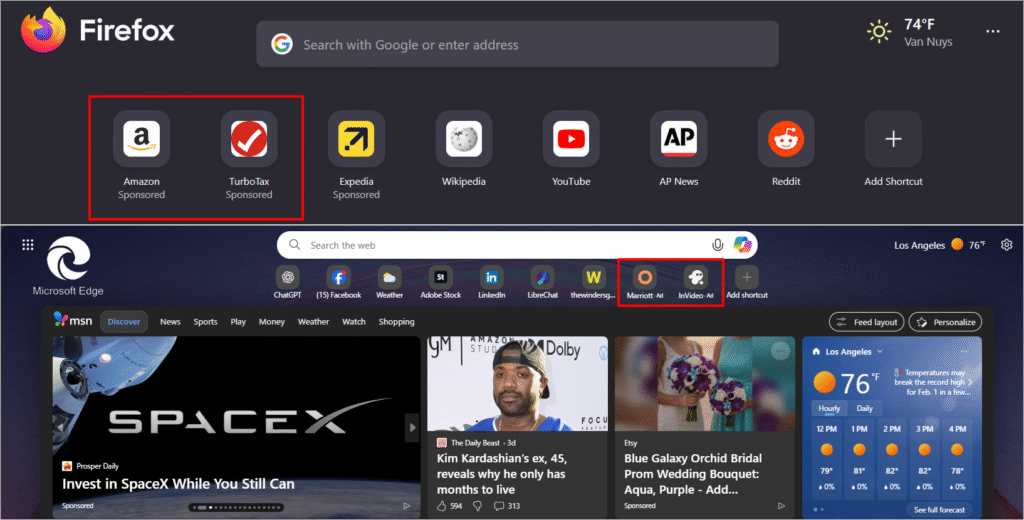
Elevate your content and premium partner brands by surfacing clickable modules on homepage, app launch or new-tab environments—prime digital real estate for high-yield discovery.

Example of sponsored browser tiles on browser new-tab pages (illustrative only)

Quicklinks, Prompts and Contextual Shortcuts
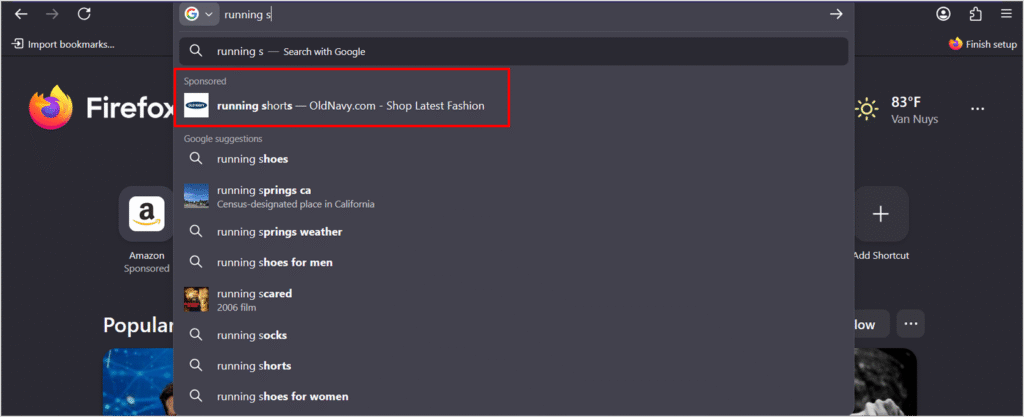
Provide frictionless navigation and commerce by integrating branded or editorially curated quicklinks accessed as users type, browse or interact with your platform.

Example of a sponsored quicklink / prompt appearing in the browser as a user starts typing (illustrative only)

Content Discovery Recommendations
Engage readers with tailored product lists, trending stories, and sponsored content blended natively within personalized feeds or article flows (e.g., app homepages, news portals), driving both engagement and incremental media value. Note, we do not do leverage search placements on major search engines (e.g., Google, Yahoo, Bing).

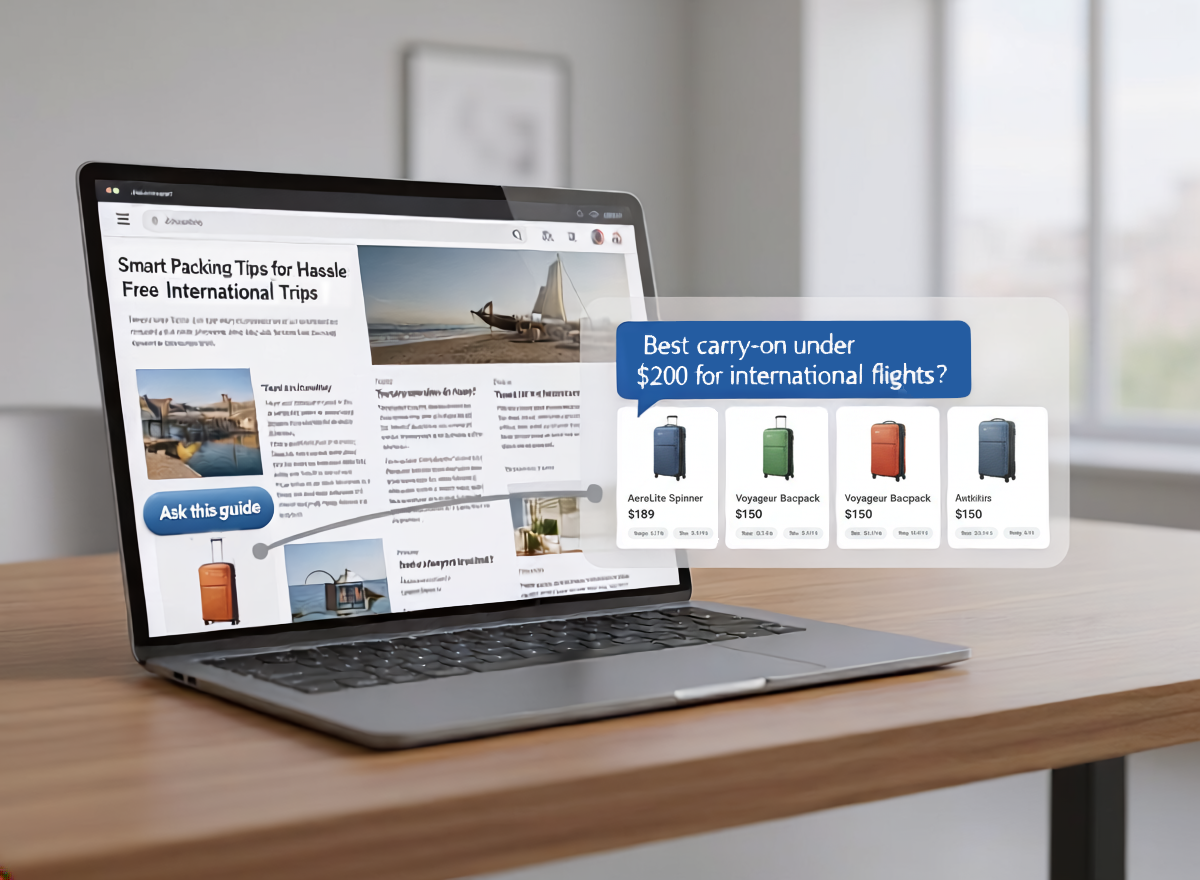
Example of sponsored content surfaced in a publisher discovery feed (illustrative only)

Answer and Suggestion Widgets
Serve up relevant answers or “people also recommend” modules within your search bars, FAQs, and interactive queries—helping users get what they need, and allowing you to participate early in the decision journey.

Content Recommendation Widgets and Carousels
Monetize existing reader journeys with trusted “Recommended for You” carousels surfacing both editorial picks and paid offers, powered by leading recommendation partners.

For publishers, integrating these pre-search discovery placements helps maximize yield from both premium brand direct campaigns and programmatic advertisers seeking measurable engagement at earlier stages of the funnel.

The Audience and Revenue Benefits of Pre-Search Discovery

Publishers that guide the audience before search capture first-mover mindshare, build loyalty and trust, and drive robust session depth. By monetizing early-stage placements, publishers benefit from higher CPMs and CPA-based sponsorships, which reduces dependency on volatile social or search referral traffic and creates a resilient, owned audience ecosystem.

Furthermore, data from pre-search discovery unlocks broader insights. Understanding what inspires user exploration, not just what triggers a search, improves personalization, retention and future yield management.

Challenges and Readiness for Publisher Monetization

Early intent and pre-search monetization requires new skills, partnerships, and analytics capabilities. Publishers must diversify content and monetization strategies for multi-platform, multi-device environments; leverage data to present the right recommendations, commerce, or content at the right moment; maintain clear user privacy standards aligned with evolving regulations and expectations; and collaborate across yield, sales, and editorial teams to optimize both engagement and revenue.

Readiness Checklist for Publishers:

  • Are you surfacing premium content and product recommendations before a user initiates search?
  • Do you have partnerships or technology to deliver high-value placements beyond basic display?
  • Can you attribute pre-search placements to audience engagement or monetized actions, not just pageviews?
  • Are your teams aligned to balance user experience, editorial control, and partner revenue?
  • Is your data foundation strong enough to drive both personalization and measurement across discovery moments?

How Publishers Can Lead in Pre-Search Discovery

Leading in pre-search discovery takes more than adding new placements; it demands unified strategy, agile collaboration, and a commitment to both editorial excellence and revenue innovation.

  1. Audit Your Discovery Ecosystem
    Map where and how your audience begins exploring—homepage modules, mobile apps, trending feeds, recirculation widgets.
  2. Integrate Diverse Monetization Placements
    Deploy a blend of curated recommendations, sponsored tiles, commerce links, and contextual widgets to optimize both engagement and revenue across every touchpoint.
  3. Enhance Personalization and Targeting
    Use first-party and contextual data to surface relevant content and products at the pre-search stage, ensuring recommendations deliver real value.
  4. Improve Measurement and Yield Optimization
    Implement analytics that link discovery placements to engagement, new session starts, commerce, and downstream actions—moving beyond last-click to full-funnel publisher ROI.
  5. Foster Cross-Functional Collaboration
    Align revenue, product, and editorial teams to continually iterate on placement strategy, creative, and measurement.
  6. Partner Strategically
    Collaborate with solution providers like Shopnomix to access premium brand demand, advanced monetization models (CPA, CPC), and expertise in discovery-first campaign optimization.

The Net Effect

For publishers, pre-search discovery isn’t just a new ad format; it’s a foundational pillar of audience engagement and long-term revenue growth. Those who lead in pre-search will not only win brand budgets and higher margins, but also secure a loyal, highly engaged audience in a world dominated by AI-powered, multi-platform digital journeys.

Don’t wait for users to search; instead, shape their first impression. Enable pre-search discovery, monetize pre-search inventory with Shopnomix, and help performance-driven brands meet audiences at the true start of their journey.

The Click is No Longer the Contract

Intent to Impact

Bi-Weekly Signals for CEOs, CMOs, and CROs — Ending January 25, 2026

For years, affiliate commerce ran on a simple agreement: discovery happened elsewhere, the click marked influence, and the sale settled the math. That contract is quietly breaking. Not because affiliates stopped working, but because the surfaces where decisions happen have moved. AI assistants, platform-native storefronts, and closed-loop retail environments are compressing the funnel in ways that remove the click without removing influence.

Google’s push to embed buy buttons directly inside AI-driven commerce checkout is the clearest signal. When discovery, evaluation, and purchase collapse into a single conversational flow, the moment where a referral traditionally “proved” its value disappears. The shopper still arrives informed. The persuasion still happened. But the measurable handoff is gone, and the economics of attribution start to drift out of sync with reality.

What replaces the click isn’t traffic volume, but proof. Affiliate attribution without clicks forces brands and publishers to rethink how influence is demonstrated when value is created upstream and resolved elsewhere.

Control Is Moving Upstream

As checkout moves into assistants and retail platforms, control over attribution, pacing, and economics moves with it. Protocols, standards, and closed systems now decide who gets visibility and who gets paid. When influence happens off-site, traditional referral logic struggles to capture contribution, and partners closest to the final moment of conversion gain disproportionate leverage.

This is where influence-based measurement models begin to matter. Measurement shifts away from sessions and last-touch credit toward exposure, consideration, and downstream behavior. Brands that fail to evolve here risk underpaying real demand drivers while over-rewarding proximity to checkout.

Creator Storefronts Become Conversion Infrastructure

At the same time, creator storefront conversion economics are reshaping affiliate performance from the ground up. Platforms like TikTok Shop and retailer-run creator programs no longer behave like marketing channels. They operate as retail systems, complete with inventory decisions, pricing constraints, and margin trade-offs that directly affect outcomes.

Creators function less like media partners and more like distributed sales teams. Performance is governed by platform rules, algorithmic distribution, and native checkout mechanics. Treating these environments as awareness channels ignores the operational reality that supply, fulfillment, and offer design now determine success.

This matters even more as consumer demand remains uneven. With shoppers pulling back on big-ticket discretionary purchases, deal cycles stretch and conversion windows widen. Influence may occur days or weeks before purchase, often across multiple surfaces, further weakening click-based attribution and increasing friction around credit and commission timing.

Post-Purchase Outcomes Now Define Performance

Conversion no longer ends at checkout. Retailers are tightening return and refund policies using AI to detect fraud and abuse, redefining what counts as a “good” sale. A conversion that doesn’t survive post-purchase scrutiny erodes margin and distorts performance signals.

For affiliate programs, this introduces new pressure. Partner quality must be evaluated not just on front-end conversion rates, but on net revenue durability. Attribution models that ignore returns, refunds, and post-purchase behavior will increasingly misrepresent true performance.

Attribution Is Becoming Governance

As funnels compress, affiliate governance and compliance are moving out of the ops backlog and into executive oversight. Extension behavior, code replacement, and manipulation are no longer tolerated as gray areas. Networks are enforcing clearer standards, and participation depends on adherence to defined rules of influence and credit.

This shift reframes attribution as a condition of doing business, not a negotiable detail. Brands that lack strong governance expose themselves to commission leakage, partner disputes, and reputational risk as enforcement tightens.

The affiliate channel isn’t disappearing. It’s being redefined. As control moves upstream and measurement moves beyond clicks, affiliate commerce becomes a distributed sales system whose value must be proven through influence, integrity, and net impact.

The Big So What

For CEOs

  • Conversion control is shifting away from referral paths and toward platform-native environments
  • Affiliate value must be evaluated on influence and net revenue, not clicks alone
  • Governance gaps in attribution now represent real financial risk

For CMOs

  • Measurement models need to reflect influence across AI, creator, and retail surfaces
  • Partner evaluation should prioritize contribution to consideration, not proximity to checkout
  • Budget allocation will increasingly favor channels that can prove incremental impact

For CROs

  • Attribution logic must evolve to handle no-click and delayed conversion paths
  • Return behavior and post-purchase outcomes should factor into commission strategy
  • Stronger partner standards are required to protect margin as funnels compress

References

Google brings buy buttons to Gemini and AI search — The Verge

Google’s Universal Commerce Protocol and the race to wire agentic shopping — Opus Research

Partnerize wants to reimagine affiliate attribution — and it doesn’t involve clicks — AdExchanger

For retail brands, TikTok Shop’s rise brings viral success — and disruption — Retail Dive

Impact bans Honey from affiliate marketplace after investigation — Retailboss

Upstream Performance Marketing: Getting Ahead of Shopper Intent with Pre-Search Advertising

Digital marketing is evolving as consumers encounter brands and products through pre-search advertising and discovery, often long before they ever type a search query. This shift toward early-intent and discovery marketing means the most effective brands engage shoppers first, shaping intent and influencing decisions during new types of engagement moments.

The Evolution of Performance Marketing Metrics

Performance marketing has advanced alongside digital measurement. Early efforts prioritized visibility through CPM, evolved to CPC with greater accountability, and now often favor CPA pricing models where spend ties directly to results like sales or qualified leads.

As measurement becomes more outcome driven, brands need partners that can influence shoppers earlier in discovery while still delivering accountable performance. That is where Shopnomix comes in.

Shopnomix’s Advantage in the Modern Funnel

Shopnomix is built for outcome-first, pre-search advertising and performance marketing. The platform unlocks high-visibility placements such as sponsored browser tiles, quicklink ads and targeted content modules that position brands at the center of early digital discovery. A CPA approach reduces wasted spend, while a dedicated team manages campaign complexity, risk and optimization as shopper journeys diversify.

Today, discovery and pre-search advertising increasingly happen outside traditional keyword search. Shoppers now explore brands through conversational, feed-based, and publisher environments, often arriving with more specific intent than a simple keyword would reveal. Reaching them in these environments gives brands earlier and greater influence on preference formation.

Types of High-Impact Pre-Search Digital Placements

Sponsored Browser Tiles
Place clickable brand tiles on new-tab browser pages, capturing attention the moment a user starts an online session.

Firefox and Microsoft Edge new-tab pages showing sponsored shortcut tiles highlighted in red
Example of sponsored browser tiles on browser new-tab pages (illustrative only)

Quicklinks and Prompts
Serve shortcut suggestions as users type or navigate, steering them toward relevant offers at the pre-search moment.

Firefox address bar suggestions showing a sponsored quicklink result highlighted in red while the user types
Example of a sponsored quicklink / prompt appearing in the browser as a user starts typing (illustrative only)

Content Discovery Suggestions
Integrate sponsored content in personalized feeds (e.g., app homepages, news portals), surfacing brand offers as users browse topics. Note, we do not do leverage search placements on major search engines (e.g., Google, Yahoo, Bing).

SmartAsset page labeled ‘ADVERTORIAL’ with the headline ‘Capital Gains Tax Strategies for Seniors’ and a ‘Take Matching Quiz’ button
Example of sponsored content surfaced in a publisher discovery feed (illustrative only)

Answer Suggestions
Deliver smart recommendations in search bars and widgets (e.g., “people also ask”) to reach shoppers in the earliest moments of intent expression.

Content Recommendation Widgets
Feature branded offers or stories in publisher carousels and “Recommended for You” slots, driving engagement in trusted editorial environments.

Integrating these placements enables brands to guide shopper journeys more effectively and efficiently to conversion. Pre-search advertising and discovery are now essential components of a modern performance strategy—brands leveraging these tactics consistently achieve lower acquisition costs, greater trust, and stronger downstream conversions.

The Performance Advantage of Capturing Early Shopper Intent

Brands that engage shoppers earlier in the decision journey gain a meaningful performance edge. By showing up before search and comparison begin, brands can shape preferences when shoppers are most open to influence, capturing mindshare and trust ahead of competitors, often at a lower acquisition cost.

Pre-search and early-stage placements such as discovery modules, recommendations and contextual prompts do more than increase visibility. They surface stronger intent signals by revealing what shoppers are trying to solve at the very start of their journey, not just what they eventually type into a search box. These insights lead to smarter creative, sharper targeting and more effective merchandising.

Early engagement also simplifies the path to purchase. Rather than competing in crowded search results, brands connect with shoppers as choices are being narrowed, guiding consideration earlier and creating a clearer, more efficient route to conversion.

Challenges and Readiness for Modern Performance Marketing

Early-intent and pre-search advertising requires new operational muscles like cross-channel data, managing multi-platform campaigns and attributing early-journey value calls. Evolving privacy and data standards also push brands toward greater transparency and collaboration.

Readiness checklist:

  • Build a multi-platform discovery strategy 
  • Leverage tools and data to capture early shopper intent  
  • Measure early-stage impact beyond last-click attribution 
  • Enable agile, cross-team testing and optimization  

Many brands are still developing these capabilities. Early adopters are pulling ahead, while the wider market is only beginning to add pre-search discovery and advertising to their performance mix.

How to Win With Early-Intent Performance Strategies

Winning in this new era takes more than new placements. It requires cross-team coordination, technology integration and creative transformation:

  1. Audit Discovery Touchpoints
    Map where audiences start their journeys. Assess visibility across browser tiles, social feeds and content modules.
  2. Pilot and Scale High-Impact Placements
    Start with controlled pilots in sponsored tiles, quicklinks and content recommendations. Use structured tests to identify top-performing channels and messages.
  3. Optimize Creative for Early Intent
    Tailor messaging for early-stage engagement. Position your brand with inspiration, problem-solving or timely offers rather than hard-sell copy.
  4. Integrate and Activate Data Across Channels
    Unify intent signals from all platforms by linking analytics, media and CRM tools. Feed insights directly into targeting and bid management.
  5. Measure Incrementality and Modernize Attribution
    Use multi-touch analytics and incrementality testing to quantify pre-search ad impact and drive investment decisions. Don’t rely on last-click alone to tell the story.
  6. Build Organizational Agility
    Foster rapid experimentation and cross-functional teamwork so teams can seize early discovery opportunities before the competition.
  7. Partner With Experts
    Work with Shopnomix for access to premium pre-search inventory, advanced optimization and strategic insights as discovery behaviors evolve.

The Net Effect

Moving earlier in the funnel is not a passing trend; it is a strategic advantage that will define tomorrow’s most successful brands. Those who lead the shift to pre-search discovery, pre-search advertising and early-intent performance marketing will shape demand, drive preference and future-proof growth as the digital-discovery landscape becomes more fragmented and AI-driven.

Brands should not settle for reacting to shopper intent. Capturing it early, then measure, test and scale pre-search advertising and discovery strategies with Shopnomix. Doing so will create powerful moments that drive tomorrow’s performance.

Publishers at a Crossroads: What We Learned at the IAB LLM Workshop and Why the AI Search Reckoning Matters

This week our team attended an eye-opening workshop at IAB’s 30th Annual Leadership Meeting focused on how large language models and AI search are upending the economics of the open web for publishers. Insights shared by Jonathan Roberts, chief innovation officer at People Inc. and IAB Tech Lab’s Shailley Singh and Hillary Slattery built on themes that have already begun to dominate industry discourse in 2026.

Here’s what premium publishers need to understand and act on now.

The Traffic Collapse Is Real — Not Hypothetical

In his January column, The AI Search Reckoning Is Dismantling Open Web Traffic – And Publishers May Never Recover, AdExchanger’s Anthony Vargas notes that generative AI hasn’t just altered search, it has fundamentally changed how monetization works on the open web. 

Publishers have reported traffic declines of 20%, 30%, and in some cases as much as 90%, driven by zero-click AI search summaries and answer engines that keep users on the platform and off publisher sites.

This isn’t theoretical. Across verticals, from news to niche blogs to ecommerce, the sustained decline in referral traffic is reshaping the economics that publishers have relied on for decades.

The Fundamental Shift: From Traffic to Contribution

At the IAB workshop, participants repeatedly came back to the idea that traffic is no longer the primary currency.

In the old world, search engines aggregated links and sent visits downstream. In the AI era, branded summarization and agent-driven discovery extract the value before a click happens. This means:

  • Users increasingly get answers without visiting publisher sites
  • “AI Overviews” drastically reduce click-through rates
  • Traditional referral traffic-based advertising models are eroding

Vargas’ piece made this tangible with real performance data showing how AI search is eating into organic referrals, even for high-quality content.

This reinforces what we heard at the workshop: publishers must shift their thinking from “protecting traffic” to “monetizing contribution.”

Blocking Isn’t a Solution — It’s a Tactical Response

Many publishers responded to early AI bots by tightening robots.txt and blocking crawlers. Roberts made it clear why this alone won’t protect value:

  • Blocking invites anonymity and spoofed agents
  • It often blocks more bot traffic than real user traffic
  • It doesn’t establish permissions, provenance, or compensation

This reflects a real market truth: simply hiding content doesn’t create economic leverage. Instead, publishers need frameworks that declare who is accessing content and under what terms.

CoMP: A Foundation for Rights, Not a Price Regulator

The Content Monetization Protocol (CoMP) introduced by the IAB was presented as a standards-first framework for managing AI agent access. CoMP is designed to:

  • Allow machines to declare identity and intent
  • Support permissioning and licensing at scale
  • Track usage through tokenized authentication
  • Separate discovery from downstream usage and monetization

This matters because the current ecosystem has no standardized way of signaling rights to AI platforms. Publishers either give content away for free or block it — neither of which yields compensation in an AI-driven discovery world.

There Is Real, Payable Demand — If You Can Capture It

One of the most encouraging themes of the workshop was that the demand for trusted content is not imaginary:

  • LLM operators already work with rate cards (often cited in the industry as $10–$30 CPM at scale)
  • Enterprise buyers have budgets and workflows tied to high-quality insight
  • A growing number of agents beyond major chatbots are surfacing value (e.g., specialized assistants, tool-chain agents, vertical search)

The issue isn’t a lack of value. It’s that publishers have not yet established the standards and signals needed to capture that value in a machine-mediated world.

The Road Ahead: Discovery, Rights, and Premium Content

Here’s how we think publishers should be preparing:

1. Treat bots as a class of users – Measure their value, track their interactions, and establish identity, not just block them.

2. Signal rights and intent clearly – Publishers need machine-readable metadata: rights, permissions, usage conditions, so AI systems understand what they can and cannot do.

3. Separate discovery from usage monetization – Discovery can be public, but usage (summarization, training, reuse) should require consent and potentially compensation.

4. Build or join content marketplaces – A marketplace layer could bring relevance, quality, and rights data to the surface in ways traditional search never did.

5. Diversify beyond referral traffic – Subscription, direct licensing, APIs and usage-based models are becoming more important as click-based ad revenue declines.

What This Means for Premium Publishers

The open web has entered an AI economics era, not just an AI technology era. The impact of AI search is not modest or transient, it is dismantling old traffic models. 

Workshop participants and Roberts underscored that without new standards, publishers will continue to lose influence and revenue.

“The way publishers have traditionally measured success—by traffic—is changing fast. AI search is rewriting the rules, and zero-click answers mean fewer clicks, not less value. The real opportunity is in recognizing the contribution publishers make to this new discovery landscape and creating clear, actionable ways to monetize it. At Nomix Group, we’re focused on building systems that don’t chase illusions of old traffic but instead capture real value where commerce actually happens.”

Todd Ulise, Chief Revenue Officer, Nomix Group

But the good news is that standards like CoMP, combined with strategic rights management and monetization frameworks, offer a pathway forward. Publishers who engage early with these protocols, build machine-readable rights signals, and lean into new discovery markets will have an advantage in the next chapter of content economics.

Casting a Wider Net: Shopnomix Unlocks Incremental Search Traffic Beyond Google

The global search landscape has undergone a profound transformation in the last eighteen months, redefining how consumers discover products and services online. For decades, Google’s dominance was nearly absolute, secured through exclusive browser agreements and default placements on mobile devices. These arrangements channeled over 90% of global search traffic through Google, limiting options for both consumers and brands.

Recent regulatory rulings have challenged this monopoly. Governments worldwide have acted to end exclusive default agreements, requiring Google to share search index data with qualified competitors and enabling a more open market. Alongside these changes, Google’s increased focus on paid search has raised costs and diminished the quality of organic results, creating openings for alternative search experiences.

This shift has led to a surge in traffic from independent browsers, AI-powered search engines, and next-generation distribution channels, now accounting for over 25 percent of global queries—a level of diversity unseen in two decades.

Shopnomix helps brands navigate this evolving landscape by enabling them to cast a wider net. Through our Pronomix platform and Shopnomix channels, we provide automated bidding technology that unlocks incremental cost-per-click opportunities outside Google’s ecosystem. This means brands can extend their visibility to where today’s consumers are actively searching and shopping—opening incremental traffic streams that were previously inaccessible.

As search options expand, taking a broader approach will reveal new opportunities for brands to connect with modern buyers across emerging platforms and drive growth. To learn how Shopnomix can help you beyond the traditional search landscape.

As the search environment grows more varied, taking a broader approach will reveal new opportunities to connect with consumers and drive growth. To learn how Shopnomix can help you fish beyond Google for incremental traffic, reach out to start a conversation.

Two Holiday Americas: How Inflation and SNAP Cuts Are Splitting the Season — And What Brands Can Do

The 2025 holiday season reflects a growing economic divide. Rising inflation and SNAP benefit changes continue to tighten budgets for millions of Americans. At the same time, a substantial group maintains strong spending power. This split is reshaping shopping behaviors and requires brands to rethink how they engage consumers.

The Holiday Shopping Divide: Who’s Buying and Who’s Budgeting?

Retail spending remains solid, with forecasts expecting total holiday sales near $1 trillion and continued growth in online commerce driven by mobile devices. But beneath the headline numbers are two very different consumer realities.

Middle- and higher-income households are increasing their holiday budgets, often focusing on premium categories such as apparel, beauty, and general merchandise. Surveys show these consumers plan to spend more despite economic uncertainty.

In contrast, lower-income families, especially those impacted by SNAP benefit reductions and rising food prices, face tighter budgets. Research highlights rising food insecurity and reduced discretionary spend among this group. Yet, holiday giving remains a priority, leading these consumers to rely more on discounts, delayed purchasing, and flexible payment options like Buy Now, Pay Later.

Together, these trends create “Two Holiday Americas”… one marked by financial caution and constrained budgets, the other by more traditional or aspirational shopping. Brands that recognize this divide and adapt will connect more effectively.

Different Shoppers, Different Motivators

Deal Seekers prioritize savings. Most consumers actively seek coupons, cashback, and deals, with nearly 25 percent of online sales using discount codes, especially in apparel, beauty, and general merchandise. They often start shopping early to take advantage of promotions.

Premium and Aspirational Shoppers focus on quality, exclusivity, and experience. Influencer endorsements, limited editions, and AI-driven recommendations influence their purchases. Many combine in-store browsing with online buying, using loyalty benefits and personalized offers.

How Retailers Respond: Tactics Reflect Economic Realities

Retailers use deep discounts, dynamic loyalty rewards, and extended promotions to appeal to deal seekers. Flexible payment and fast delivery options support cautious consumers.

Premium brands invest in influencer marketing and experiential events to build trust and exclusivity. AI and conversational commerce help offer early, personalized discovery to aspirational shoppers.

Shopnomix’s Approach: Connecting Brands to Both Segments Through Intent-Driven Commerce

In a holiday market divided by economic realities, reaching the right consumers at the right moment is more important than ever. Shopnomix’s platform specializes in intent-driven marketing—connecting brands with shoppers who are actively demonstrating purchase intent early in their journey.

For budget-conscious consumers, Shopnomix delivers placements on deals and coupon sites, loyalty portals, and cashback platforms. These channels attract shoppers explicitly seeking savings and value, helping brands capture incremental sales from an audience that might be missed through typical search or social ads.

For premium and aspirational buyers, Shopnomix offers AI-powered answer engines, influencer-amplified content, pre-search tiles, and app preloads. These placements engage consumers who are exploring brands and products with genuine interest, often before turning to traditional search engines or marketplaces.

By leveraging exclusive inventory combined with proprietary data signals of shopping intent—such as browsing behavior, loyalty program activity, and purchase signals—Shopnomix enables brands to target audiences precisely. This targeted, intent-driven approach means advertisers can avoid wasted spend, reduce competition with their own campaigns, and maximize incremental revenue across all consumer segments.

What Brands Should Do This Holiday Season

To succeed, brands should:

  • Segment audiences and tailor messaging for deal seekers and premium buyers.
  • Use Shopnomix’s placements to reach consumers where they discover and shop.
  • Offer dynamic, personalized incentives to boost engagement.
  • Continuously monitor and optimize campaigns in response to consumer behavior.

The Net Gain

The economic divide shaping the 2025 holiday season presents clear challenges, but also distinct opportunities. Brands that recognize the “Two Holiday Americas” and tailor their strategies accordingly can connect with consumers more effectively and drive meaningful incremental growth.

By leveraging intent-driven marketing platforms like Shopnomix, advertisers gain the ability to reach both budget-conscious deal seekers and premium shoppers with precision and relevance. This approach minimizes wasted spend and competition within saturated channels, delivering new customers and higher returns.

The net gain is stronger marketing performance, deeper customer relationships, and a competitive edge in a complex market. As you plan for the holidays, embracing this nuanced, data-driven strategy will position your brand to win—no matter which side of the divide your customers fall on.

Santa’s Checklist for Brand Marketers: Final Q4 Moves for Black Friday, Small Business Saturday and Cyber Monday

The countdown is on! In the next few days, keep shoppers confident and your team focused with some pro tips from the performance marketing experts at Shopnomix. Start with these seven moves below; they remove hesitation, keep price claims consistent, and target spending at the offers most likely to convert in the coming weeks.

The Nice List: Seven Last-Minute Moves To Make Now

Start with the Nice List. Make the Price Story for your hero offers identical everywhere, then surface the basics that remove hesitation—clear shipping cutoffs and the returns line. That steadies the experience and stops last-mile churn. Short runway? Do 1–3 today, 4–5 tomorrow, and 6–7 as capacity allows.

  1. Lock the Price Story and Feature Hero Offers

    Pick three to five offers and make the Price Story and price math identical across homepage, cart, email and SMS; then carry the same headline and framing everywhere. Consistency wins.

    Quick checks

    • Hero SKU list locked and consistent everywhere
    • Identical Price Story and creative framing across surfaces
    • Cart and checkout mirror product detail page (PDP) math
  2. Audit Promo Codes (No Stacking)

    One public code and one VIP code—tested across PDP ribbons, cart, checkout, email, SMS, and affiliate terms. Clear language when a code is rejected.

    Quick checks

    • Codes validated across all surfaces
    • “No stacking” message is clear and human
    • Affiliate terms reflect the same rules
  3. Revisit Free-Shipping Threshold

    Confirm the threshold, show progress-to-free-ship in cart, and state shipping cutoffs in plain language by speed and time zone.

    Quick checks

    • Free-shipping threshold validated for margin
    • Progress-to-free-ship component visible in cart
    • Cutoffs by speed written in plain language
  4. Share Promos Early and Often With Publishers

    Deal roundups and partner hubs perform on accuracy. Ship exact price math and creative now, then update changes on a set cadence (for example, noon daily).

    Quick checks

    • Final promo copy, price math, and hero images delivered
    • Change log and daily update window committed
    • Tracking and attribution rules aligned with partner terms
  5. Activate Bottom-Funnel Partners

    Brief coupon, cashback, and incentive partners with final copy, codes, deep links, and image assets. Set a daily update window through Cyber Monday so placements stay accurate.

    Quick checks

    • Publisher list and contacts confirmed
    • One-pager with offers, codes, deep links, brand rules, and image assets
    • Daily update cadence through Cyber Monday set (who sends, when)
  6. Adjust CPA Targets and Bid Rates for Q4

    Auctions move fast this week. Set channel-specific CPA caps, bid floors, and daypart rules, with a small stretch band reserved for proven hero products.

    Quick checks

    • CPA targets by channel approved
    • Bid floors and caps documented by time of day and device
    • Exceptions list for hero SKUs pre-cleared
  7. Keep Cyber Monday Lean

    Reuse Black Friday creative with one meaningful twist (add-on, bundle sweetener, or points multiplier). No net-new builds that drain ops.

    Quick checks

    • One headline variant, same design system
    • Offer logic shifts from “deep cut” to “complete the cart”
    • No net-new builds added

If You Have Time

Once the foundation is steady, widen the reach. Brief coupon and cashback partners with final copy, codes, and deep links and keep those briefs current through Cyber Monday. Tighten CPA caps and bid guardrails, with a modest stretch band reserved for proven products. You’re not doing more—you’re directing the same energy with clearer rules.

  1. Publish Service Promises You Can Keep

    State cutoffs by speed (day and time) and any returns extension in cart and confirmation. Keep support scripts aligned.

    Quick checks

    • One-line cutoffs by speed published
    • Returns extension visible pre- and post-purchase
    • Support scripts updated across channels
  2. Bundle Before You Discount

    Bundles build value without deeper markdowns. Surface them on the Black Friday/Cyber Monday landing pages and protect single-SKU price floors.

    Quick checks

    • Three bundles live and shoppable (good/better/best)
    • Bundle cards present on Black Friday/Cyber Monday landing pages
    • Price-floor logic tested so bundles don’t undercut hero singles
  3. Create Inventory Urgency (Real)

    Limit “low stock / selling fast” to a short whitelist and auto-hide on restock. Urgency should be true or it backfires.

    Quick checks

    • Ten SKUs whitelisted for urgency signals
    • Dynamic badges tested to prevent stale warnings
    • Hide/show rules confirmed against inventory events
  4. Test New Channels: Influencers, Answer Engines, AI

    Pair two creator hooks with a short brand POV reel. Add on-site Q&A blocks for hero SKUs to feed answer-style surfaces.

    Quick checks

    • Two creator hooks and one brand POV reel approved
    • On-site Q&A or FAQ for hero SKUs published
    • Measurement plan tied to assisted conversions
  5. Offer Financing Where It Lifts AOV

    Limit BNPL or 0% messaging to high-consideration PDPs. Review disclosures; test placement on mobile.

    Quick checks

    • Financing limited to high-AOV PDPs
    • Disclosure language reviewed
    • Placement tested on mobile
  6. Prepare the Post-Black-Friday Recovery

    Queue a “what sold out” note with waitlist buttons and replacements. Add a one-screen survey to capture friction and intent for the next push.

    Quick checks

    • Back-in-stock and alternatives email drafted
    • Waitlist buttons live
    • One-screen survey installed

The Net Gain

This plan turns an otherwise chaotic season into a more predictable one. The experience gets simpler, the offer stays consistent and hesitation drops. More shoppers finish checkout, support call volume decreases, revenue concentrates on the right offers without leaning on deeper discounts and media coverage stays accurate. Your marketing investment works harder instead of louder, and the momentum carries through Cyber Monday into the week that follows.

The Q4 Bottom-Funnel Reframe: Convert Without Killing Your Brand

As retailers gear up for the crucial Q4 period, adapting to value-seeking consumer behaviors becomes paramount. From October to December, shifts in buyer psychology – marked by increased price sensitivity, deal intent and sense of urgency – present an opportunity to engage ready-to-buy shoppers. By strategically leveraging bottom-funnel partners such as deals, coupons, cashback and cart-adjacent placements, brands can capture this demand without compromising integrity.

Why Q4 Buyer Psychology Favors Value Signals

During Q4, holiday-focused consumers prioritize value, which can be signaled strategically without eroding brand standards. With November and December mapping to around 19% of annual retail sales, it’s imperative for brands to capitalize on this peak shopping period. The 2024 U.S. holiday retail sales reached a record $994.1 billion, showing the significant revenue potential this season brings. For brands, this means embracing strategic value signaling to maximize sales without eroding brand standards.

The Case for Controlled Bottom-Funnel Partners

Integrating bottom-funnel tactics requires a calculated approach. By examining factors such as brand risk, margin effects, and audience alignment, brands can engage in value signaling that enhances consumer engagement without descending into indiscriminate discounting. A notable 54% of shoppers typically buy gifts on sale, highlighting the efficacy of well-executed promotional strategies.

Editorial + Bottom-Funnel: A Two-Track System

Deploying a dual strategy that combines editorial commerce content with conversion-focused partners ensures a seamless path to purchase. The editorial track primes the audience with engaging content that inspires and informs, while bottom-funnel partners complete the conversion journey. This synergy enhances the consumer experience from discovery to acquisition, capturing value at every touchpoint.

Guardrails That Protect Margin and Brand

Implementing safeguards, such as audience-specific offer tiers, frequency caps, and rigorous UTM management, protects against margin depletion while maintaining brand image. Careful management of promotional codes and creative standards ensures that value signals encourage purchases without diluting brand perception.

The Net Gain

Q4 presents a powerful opportunity to harness strategic bottom-funnel partnerships that bolster conversions while maintaining brand integrity. By combining data-driven insights with precise execution, brands can achieve significant net gains during this critical shopping season. Engage with Shopnomix to tailor a Q4 strategy that maximizes your performance metrics and strengthens brand loyalty.

Navigating Transparency in Affiliate Marketing: The Shopnomix Approach

By Amélie Chagnon
Global Head of Advertising Partnerships & Performance Media

Although I’m relatively new to the industry, one thing jumps out immediately: affiliate marketing is in a trust crisis. Too many publishers have leaned on tactics that brands view as non-incremental or flat-out non-compliant. Think brand-bidding on search terms, running ads that compete directly with the brand’s own campaigns, or sneaking coupon placements into programs while presenting them as true upper-funnel drivers. These shortcuts might deliver quick wins, but over time they chip away at confidence across the entire ecosystem. The reaction was predictable. More and more brands and agencies now demand full visibility into every traffic source and every tactic so they can take back control.

What started as a reasonable reaction is now becoming a push for accountability which now puts the most diligent players in a tough spot. The bad actors have effectively penalized the good ones, forcing them to choose between protecting the trade secrets that keep them competitive and meeting a rising demand for transparency.

The Challenges of Transparency

Radical openness sounds noble, but for affiliates who actually play by the rules it’s far from simple. The industry has moved well past the days of dropping a static link in an article and sharing a URL. Modern placements are dynamic, on-demand, and powered by technology, which is far too complex to reduce to a neat report without losing context or exposing the trade secrets that make them work.

Give a client a raw feed of traffic data and two things often happen. First, early results get misread as underperformance, leading to premature cuts on channels that might have matured into top converters. Second, a client might believe they can bypass a managed source altogether, overlooking the optimization and safeguards that keep quality high. Add to that a familiar double standard: when traffic is low, we’re pushed to drive more, and when it’s high, we sometimes find ourselves questioned for delivering it. The same results that spark celebration one week can trigger scrutiny the next.

And perhaps the biggest unspoken risk can’t be captured in any metric. After investing time, money and experimentation to find what works, publishers face the very real possibility of being cut out altogether when a brand decides to “go direct” and build its own relationship with a placement that was proven successful by the affiliate in the first place. Years of effort can vanish overnight if transparency turns into a blueprint for disintermediation.

Aligning with Industry Standards

During partner discussions, the importance of navigating these transparency expectations must consistently be emphasized. It’s critical to acknowledge that even leading companies, such as Google, maintain confidentiality regarding most aspects of their placements. By aligning with these industry standards, relationships built on trust and mutual understanding can be fostered.

At Shopnomix, we’ve learned that transparency works best when it’s structured. We group traffic into clear categories and share performance analytics inside secure frameworks. This gives partners real insight and the ability to opt out of sources they’re uncomfortable with, while protecting the years of testing and relationships that make those sources work. It also creates flexibility. Many clients who initially decline a category later see its value and ask to turn it back on.

Each placement category can also be commissioned at a different rate based on its incremental value. This way, brands can align spend with performance and reward the channels that truly drive new growth, without forcing publishers to give away the details that power their results.

Educating Clients on Transparency

Transparency fundamentally fosters trust through accountability and competence. Shopnomix takes pride in its relationships with renowned brands like Amazon and Walmart. These partnerships are built on mutual accountability and a shared commitment to success, ensuring alignment with client objectives. By diligently monitoring performance metrics, integrity is upheld, and a dedication to ethical practices is reaffirmed.

The conversation surrounding transparency involves more than just sharing data; it encompasses an educational endeavor. Equipping clients with the knowledge to appreciate the balance between transparency and the protection of sensitive information remains a priority. Through workshops and discussions, clients are actively engaged to clarify performance data’s significance. This proactive approach helps cultivate partnerships rooted in trust and collaboration.

The Net Effect

As we navigate the complexities of transparency in affiliate marketing, we encourage our clients to engage in meaningful, ongoing discussions about their needs. They should feel confident that while we safeguard certain proprietary information, their interests remain our top priority. Our goal is to empower clients to achieve their objectives while maintaining the high quality and integrity that define Shopnomix.

If you would like to learn more about the unique approach at Shopnomix or have any questions, please reach out.

The Rise of CPA Models: Why the Future of Digital Marketing Belongs to Performance

At Shopnomix, we built our business on one simple principle: results should come before spend. That’s why our entire model is CPA (cost-per-acquisition). No flat fees, no minimums, no “pay and pray.” If you win, we win.

But to understand why CPA is poised to explode in the next wave of digital marketing, it helps to step back and remember where our industry has been.

A Short History of Digital Pricing Models

In the late 1990s and early 2000s, search wasn’t king. Portals like Yahoo! dominated the web, and the real money was in display advertising led by banners, buttons and rich media. The dominant metric was CPM (cost-per-thousand impressions). Marketers paid for eyeballs, not outcomes.

Then, after Google’s IPO in 2004 (at a humble $90 a share), the economics of digital advertising flipped. Google’s CPC (cost-per-click) model showed brands they could pay for performance instead of exposure. Efficiency skyrocketed. Why pay for impressions that didn’t move the needle when you could pay only for clicks?

It was the start of a performance revolution. Suddenly, advertisers weren’t just hoping their message would land, they could now track whether or not it did.

Fast-Forward to 2025: CPC Hits Its Limits

Two decades later, CPC feels like old news. Clicks are harder to come by, competition has driven costs up, and the rise of conversational search and AI-powered answer engines means users often find what they need without clicking anywhere.

If you’re a brand heading into Q4 2025 counting on Google clicks, you’d better have a backup plan. Because when AI delivers an answer directly, the click disappears, making the CPC model start to look shaky.

CPA: A Pricing Model Built for the AI Era

This is where CPA comes in. Merchants already prefer it because it aligns spend with success: you pay a commission only when you make a sale or acquire a customer. It’s clean, accountable and sustainable.

Even more importantly, CPA fits the AI landscape perfectly. AI engines are designed to provide the right answer, the right link, and drive the right action. Attribution will flow directly from these actions, making CPA not just efficient but inevitable.

In other words: just as CPC was the leap forward from the CPM “pay and pray” era, CPA is the leap forward from CPC in a zero-click, AI-powered world.

A Bold Prediction

We believe CPA adoption is about to skyrocket. In fact, we’re betting that in the next two years, CPA will displace more than $150 billion out of a $600 billion digital ad market. That’s more than a tweak at the edges, it’s a seismic shift.

Why? Because the economics make too much sense. AI, creators and new commerce channels are all converging around outcomes, not impressions. The platforms that cling to CPM or CPC will look increasingly outdated. The ones that embrace CPA will own the future.

Shopnomix: Built for What’s Next

Unlike platforms that demand $20K+ test budgets just to get started, Shopnomix works purely on CPA. Not only do we shoulder all the risk, we take on tests and grow new brands others won’t even consider. We do this because we believe in the model — and because we believe the market is about to prove us right.

History has shown us this pattern before. Yahoo! gave way to Google. CPM gave way to CPC. Now, CPC will give way to CPA. The future of digital marketing is performance, and at Shopnomix, we’re already there.

Want to talk about what this shift means for your brand? We’d love to brief you.