Answer Engine Commerce Explained: How Publishers Drive Conversion in AI Answers

AI answer engines are reshaping how shoppers discover products, and that shift is landing directly in publisher environments. Instead of typing fragmented keywords and scrolling results, people now ask full questions in natural language inside chatbots, voice assistants, visual search tools, and increasingly within the content experiences that publishers control.

For publishers, answer engine commerce is more than a new interface. It’s a new discovery model and a new monetization surface: intent-led answers that naturally include products and offers. Publishers that build for this shift can capture higher-quality first-party intent, keep discovery on-property, and turn conversational journeys into measurable commerce revenue.

What Answer Engine Commerce Means for Publishers

Answer engine commerce for publishers is the strategy of embedding AI-driven, conversational experiences into content — and monetizing the resulting product recommendations through high-intent affiliate and sponsored placements.

In practice:

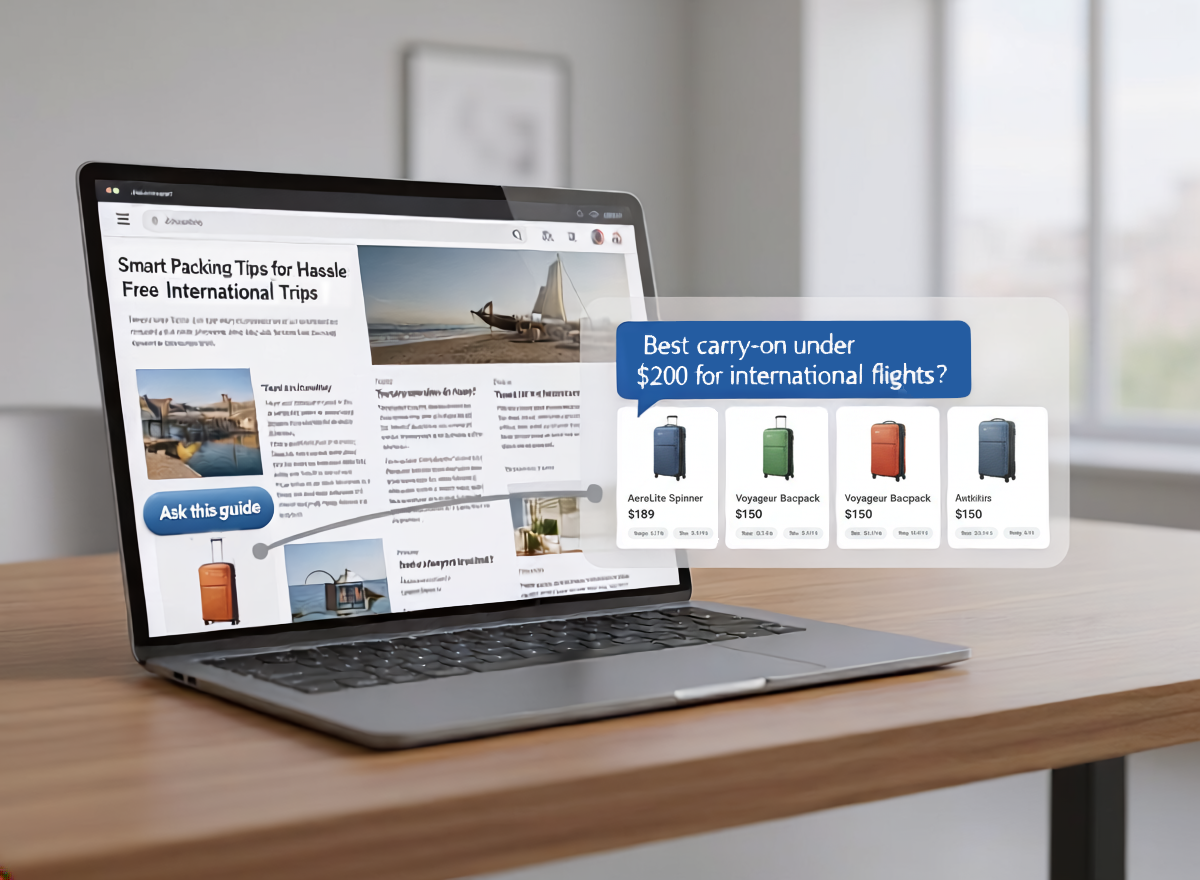
  • A reader asks a question inside your site or app (for example, “best carry-on for international flights under $200”).
  • The answer engine interprets intent and context.
  • The response includes a short, tailored set of products.
  • Those products are shoppable where the decision is happening, enabling monetization and measurement inside the session.

Publishers become a natural starting point for shopping decisions again, because the experience mirrors how people now seek guidance.

Why This Matters Now

Publishers sit closest to early intent.
Your content is where shoppers research, compare, and form preferences. Answer engines let you capture that intent explicitly — in the shopper’s own words.

Discovery stays in-flow and on-property.
Instead of sending readers away to search elsewhere, answer experiences keep the journey contained: question → answer → product → action. That improves retention and increases the value of each session.

Commerce becomes native in the answer.
When recommendations are genuinely helpful, monetization feels like part of the solution, not an interruption. That’s what keeps trust high and revenue durable.

How AI Answer Engines Improve Publisher Commerce Performance

Traditional affiliate commerce depends on static content, last-click attribution, and broad keyword targeting. Answer engines add a missing layer: conversational context at the session level.

That context upgrades performance in three ways:

  1. Higher-intent matching
    Answers reflect specific constraints and preferences, so product picks are more relevant and more likely to convert.
  2. Shorter path to action
    Good answers resolve uncertainty quickly. Fewer clicks, fewer dead ends, more purchases influenced inside one session.
  3. Stronger editorial and merchandising feedback loops
    Every question is a signal. You learn what shoppers struggle with, which attributes matter, and where content or assortment gaps exist, improving both editorial strategy and commerce ROI.

Where Answer Engine Commerce Shows Up for Publishers

Answer engine commerce works best anywhere readers naturally ask for help:

  • AI shopping assistants embedded in content
    Conversational layers inside guides, reviews, and seasonal hubs that help readers narrow choices.
  • Answer surfaces on roundups and comparison pages
    Dynamic Q&A resolving fit, features, price ceilings, and “best for me” tradeoffs.
  • Multimodal discovery layers
    Readers ask via text, voice, or images and get coherent, shoppable answers without leaving the experience.
  • On-site category navigation
    Answer engines that reconcile “what I want” with “what you have,” improving discovery across large inventories.

How Publishers Succeed with Answer Engines (and Shopnomix Helps)

Publishers that succeed with answer engines treat them as a new commerce surface, not just a new widget.

They consistently:

  • Put answer experiences where readers already show strong purchase intent (reviews, “best of,” gift guides, seasonal hubs).
  • Make sure product and offer data is structured, current, and trustworthy, so answers stay accurate.
  • Keep the experience editorially aligned and high-trust, with answers that feel like genuine help, not thin ad copy.
  • Measure sessions, not just last clicks, so they see the full influence of answer-led journeys.

Most importantly, they don’t try to rebuild the entire commerce stack themselves.

Publishers typically own the answer-engine experience: the chat/voice/visual UI and the editorial environment around it. The answer engine layer sits on the publisher or brand side.

Shopnomix powers the commerce and monetization layer inside those answers.
Its role is to use conversational context to identify and enable monetization opportunities in sessions where they typically don’t exist today.

Because answer engines rely on high-quality structured data, Shopnomix partners with Affiliate.com to access a large, normalized corpus spanning millions of products and affiliate offers. Affiliate.com provides the product and offer backbone; Shopnomix uses it to keep publisher answers confident, current, and commercially optimized.

How to Get Started with Shopnomix as a Publisher

If you’re asking “what do we actually do first?”, here’s the straightforward path:

  1. Align on a pilot surface with Shopnomix.
    Start where intent is already strong: a review hub, gift guide template, or high-value category page.
  2. Plug your answer experience into the commerce layer.
    Your AI — for example, an on-site chatbot powered by OpenAI or Anthropic, or a conversational search module from providers such as Algolia, Coveo, or Yext — remains the front-end experience. Shopnomix can plug in behind it to turn reader questions into ranked, shoppable product answers.
  3. Connect product and offer data via Affiliate.com (through Shopnomix).
    Shopnomix works with Affiliate.com so answers are backed by complete attributes, accurate pricing and availability, and monetizable links.
  4. Launch, measure, and expand.
    Once answers and shoppable products are live, Shopnomix reporting shows engagement, recommendation clicks, purchases influenced, zero-click resolution, and emerging intent patterns. You refine the experience and roll out to more categories and formats.

The net effect: you keep control of the experience; Shopnomix and Affiliate.com handle the heavy lifting on data, commerce, and measurement.

Measuring Success in Answer-Led Commerce

Because answer engines influence decisions earlier, publishers need metrics beyond CTR and last click.

The most useful view blends experience quality with revenue impact:

  • conversation engagement and completion
  • recommendation clicks and downstream actions
  • add-to-carts and purchases influenced
  • zero-click resolutions (needs met in-session)
  • intent insights from recurring questions and hesitation points

This adds a new editorial advantage: you don’t just see what sold, you see why shoppers made that choice.

Emerging Trends Publishers Should Expect

Answer engines are quickly becoming multimodal. Readers will ask by speaking, scanning, or showing images, and expect coherent, shoppable answers across formats.

Retail media will also become native inside these experiences. The winners will be publishers who:

  • maintain high-trust answer quality
  • keep product and offer data tight and current
  • commercialize without breaking the experience

The Net Gain for Publishers

Answer engine commerce lets publishers reclaim early shopping intent and turn it into monetizable journeys. As shoppers shift from keywords to questions, publishers who deliver the best answers — with relevant products woven in — become the most valuable starting point in the buying path.

Shopnomix enables that shift by powering the commerce layer inside AI discovery experiences, activating high-intent product placements across publisher ecosystems, and measuring influence with session-level clarity.

Upstream Performance Marketing: The Publisher’s Guide to Pre-Search Discovery and Monetization

Digital marketing is evolving as consumers discover brands, news, and products through pre-search discovery long before they type a search query or visit a traditional search engine. This shift toward early-intent and discovery creates a new set of opportunities for publishers: to capture audience attention first, deliver premium user experiences, and drive sustainable revenue by enabling high-value, early-stage engagements.

The Evolution of the Publisher’s Role in Performance Marketing

As measurement and monetization strategies become increasingly outcome-driven, publishers are no longer limited to monetizing clicks from search engines or passive impressions. Today’s marketplace rewards those who can connect with audiences before search begins, through curated content feeds, recommendations, and contextually relevant moments throughout the reader journey.

Publishers that empower pre-search discovery provide retail brands and agencies with access to high-impact, quantifiable inventory, unlocking new revenue streams while maintaining control over user experience and editorial integrity.

Unlocking Value Through Pre-Search Discovery

Pre-search discovery enables publishers to surface information, recommendations and inspiration as part of everyday audience engagement, not just a sidebar to organic search. By weaving together editorial excellence, recommendation engines and integrated media, publishers help consumers explore trending products, relevant content and credible advice before they even think of searching.

This “first touch” moment drives a more engaged, loyal audience. For publishers, it also unlocks new monetization: brands seeking pre-search audiences, premium placements for sponsored recommendations and incremental value well before the marketplace becomes price driven.

Types of High-Impact Publisher Placements

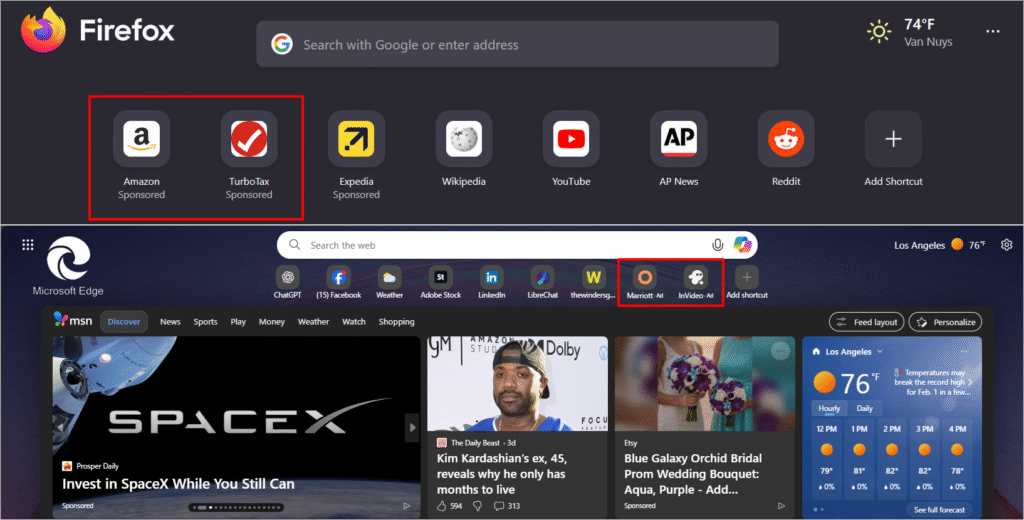
Sponsored Browser Tiles and Homepage Modules
Elevate your content and premium partner brands by surfacing clickable modules on homepage, app launch or new-tab environments—prime digital real estate for high-yield discovery.

Example of sponsored browser tiles on browser new-tab pages (illustrative only)

Quicklinks, Prompts and Contextual Shortcuts
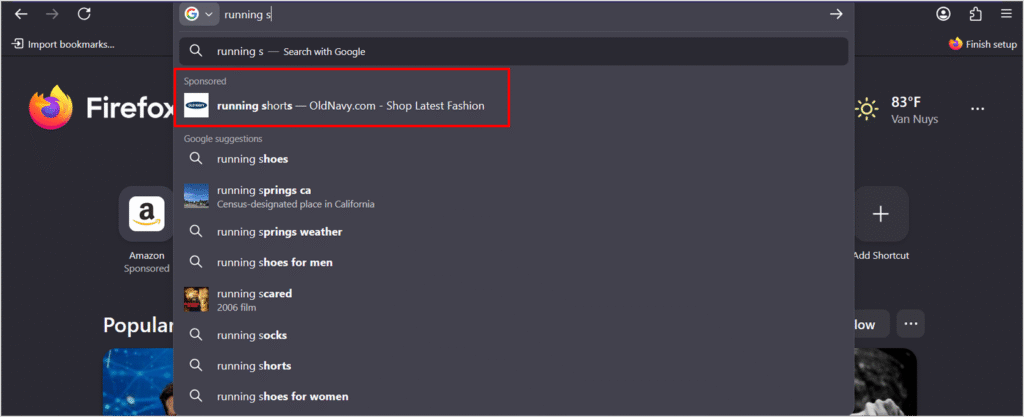
Provide frictionless navigation and commerce by integrating branded or editorially curated quicklinks accessed as users type, browse or interact with your platform.

Example of a sponsored quicklink / prompt appearing in the browser as a user starts typing (illustrative only)

Content Discovery Recommendations
Engage readers with tailored product lists, trending stories, and sponsored content blended natively within personalized feeds or article flows (e.g., app homepages, news portals), driving both engagement and incremental media value. Note, we do not do leverage search placements on major search engines (e.g., Google, Yahoo, Bing).

Example of sponsored content surfaced in a publisher discovery feed (illustrative only)

Answer and Suggestion Widgets
Serve up relevant answers or “people also recommend” modules within your search bars, FAQs, and interactive queries—helping users get what they need, and allowing you to participate early in the decision journey.

Content Recommendation Widgets and Carousels
Monetize existing reader journeys with trusted “Recommended for You” carousels surfacing both editorial picks and paid offers, powered by leading recommendation partners.

For publishers, integrating these pre-search discovery placements helps maximize yield from both premium brand direct campaigns and programmatic advertisers seeking measurable engagement at earlier stages of the funnel.

The Audience and Revenue Benefits of Pre-Search Discovery

Publishers that guide the audience before search capture first-mover mindshare, build loyalty and trust, and drive robust session depth. By monetizing early-stage placements, publishers benefit from higher CPMs and CPA-based sponsorships, which reduces dependency on volatile social or search referral traffic and creates a resilient, owned audience ecosystem.

Furthermore, data from pre-search discovery unlocks broader insights. Understanding what inspires user exploration, not just what triggers a search, improves personalization, retention and future yield management.

Challenges and Readiness for Publisher Monetization

Early intent and pre-search monetization requires new skills, partnerships, and analytics capabilities. Publishers must diversify content and monetization strategies for multi-platform, multi-device environments; leverage data to present the right recommendations, commerce, or content at the right moment; maintain clear user privacy standards aligned with evolving regulations and expectations; and collaborate across yield, sales, and editorial teams to optimize both engagement and revenue.

Readiness Checklist for Publishers:

  • Are you surfacing premium content and product recommendations before a user initiates search?
  • Do you have partnerships or technology to deliver high-value placements beyond basic display?
  • Can you attribute pre-search placements to audience engagement or monetized actions, not just pageviews?
  • Are your teams aligned to balance user experience, editorial control, and partner revenue?
  • Is your data foundation strong enough to drive both personalization and measurement across discovery moments?

How Publishers Can Lead in Pre-Search Discovery

Leading in pre-search discovery takes more than adding new placements; it demands unified strategy, agile collaboration, and a commitment to both editorial excellence and revenue innovation.

  1. Audit Your Discovery Ecosystem
    Map where and how your audience begins exploring—homepage modules, mobile apps, trending feeds, recirculation widgets.
  2. Integrate Diverse Monetization Placements
    Deploy a blend of curated recommendations, sponsored tiles, commerce links, and contextual widgets to optimize both engagement and revenue across every touchpoint.
  3. Enhance Personalization and Targeting
    Use first-party and contextual data to surface relevant content and products at the pre-search stage, ensuring recommendations deliver real value.
  4. Improve Measurement and Yield Optimization
    Implement analytics that link discovery placements to engagement, new session starts, commerce, and downstream actions—moving beyond last-click to full-funnel publisher ROI.
  5. Foster Cross-Functional Collaboration
    Align revenue, product, and editorial teams to continually iterate on placement strategy, creative, and measurement.
  6. Partner Strategically
    Collaborate with solution providers like Shopnomix to access premium brand demand, advanced monetization models (CPA, CPC), and expertise in discovery-first campaign optimization.

The Net Effect

For publishers, pre-search discovery isn’t just a new ad format; it’s a foundational pillar of audience engagement and long-term revenue growth. Those who lead in pre-search will not only win brand budgets and higher margins, but also secure a loyal, highly engaged audience in a world dominated by AI-powered, multi-platform digital journeys.

Don’t wait for users to search; instead, shape their first impression. Enable pre-search discovery, monetize pre-search inventory with Shopnomix, and help performance-driven brands meet audiences at the true start of their journey.

Publishers at a Crossroads: What We Learned at the IAB LLM Workshop and Why the AI Search Reckoning Matters

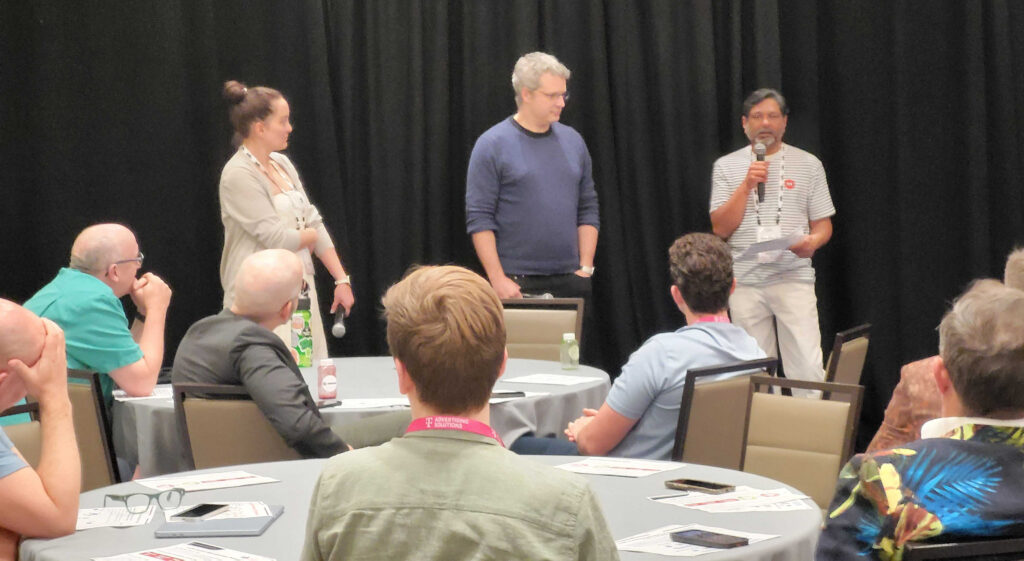
This week our team attended an eye-opening workshop at IAB’s 30th Annual Leadership Meeting focused on how large language models and AI search are upending the economics of the open web for publishers. Insights shared by Jonathan Roberts, chief innovation officer at People Inc. and IAB Tech Lab’s Shailley Singh and Hillary Slattery built on themes that have already begun to dominate industry discourse in 2026.

Here’s what premium publishers need to understand and act on now.

The Traffic Collapse Is Real — Not Hypothetical

In his January column, The AI Search Reckoning Is Dismantling Open Web Traffic – And Publishers May Never Recover, AdExchanger’s Anthony Vargas notes that generative AI hasn’t just altered search, it has fundamentally changed how monetization works on the open web. 

Publishers have reported traffic declines of 20%, 30%, and in some cases as much as 90%, driven by zero-click AI search summaries and answer engines that keep users on the platform and off publisher sites.

This isn’t theoretical. Across verticals, from news to niche blogs to ecommerce, the sustained decline in referral traffic is reshaping the economics that publishers have relied on for decades.

The Fundamental Shift: From Traffic to Contribution

At the IAB workshop, participants repeatedly came back to the idea that traffic is no longer the primary currency.

In the old world, search engines aggregated links and sent visits downstream. In the AI era, branded summarization and agent-driven discovery extract the value before a click happens. This means:

  • Users increasingly get answers without visiting publisher sites
  • “AI Overviews” drastically reduce click-through rates
  • Traditional referral traffic-based advertising models are eroding

Vargas’ piece made this tangible with real performance data showing how AI search is eating into organic referrals, even for high-quality content.

This reinforces what we heard at the workshop: publishers must shift their thinking from “protecting traffic” to “monetizing contribution.”

Blocking Isn’t a Solution — It’s a Tactical Response

Many publishers responded to early AI bots by tightening robots.txt and blocking crawlers. Roberts made it clear why this alone won’t protect value:

  • Blocking invites anonymity and spoofed agents
  • It often blocks more bot traffic than real user traffic
  • It doesn’t establish permissions, provenance, or compensation

This reflects a real market truth: simply hiding content doesn’t create economic leverage. Instead, publishers need frameworks that declare who is accessing content and under what terms.

CoMP: A Foundation for Rights, Not a Price Regulator

The Content Monetization Protocol (CoMP) introduced by the IAB was presented as a standards-first framework for managing AI agent access. CoMP is designed to:

  • Allow machines to declare identity and intent
  • Support permissioning and licensing at scale
  • Track usage through tokenized authentication
  • Separate discovery from downstream usage and monetization

This matters because the current ecosystem has no standardized way of signaling rights to AI platforms. Publishers either give content away for free or block it — neither of which yields compensation in an AI-driven discovery world.

There Is Real, Payable Demand — If You Can Capture It

One of the most encouraging themes of the workshop was that the demand for trusted content is not imaginary:

  • LLM operators already work with rate cards (often cited in the industry as $10–$30 CPM at scale)
  • Enterprise buyers have budgets and workflows tied to high-quality insight
  • A growing number of agents beyond major chatbots are surfacing value (e.g., specialized assistants, tool-chain agents, vertical search)

The issue isn’t a lack of value. It’s that publishers have not yet established the standards and signals needed to capture that value in a machine-mediated world.

The Road Ahead: Discovery, Rights, and Premium Content

Here’s how we think publishers should be preparing:

1. Treat bots as a class of users – Measure their value, track their interactions, and establish identity, not just block them.

2. Signal rights and intent clearly – Publishers need machine-readable metadata: rights, permissions, usage conditions, so AI systems understand what they can and cannot do.

3. Separate discovery from usage monetization – Discovery can be public, but usage (summarization, training, reuse) should require consent and potentially compensation.

4. Build or join content marketplaces – A marketplace layer could bring relevance, quality, and rights data to the surface in ways traditional search never did.

5. Diversify beyond referral traffic – Subscription, direct licensing, APIs and usage-based models are becoming more important as click-based ad revenue declines.

What This Means for Premium Publishers

The open web has entered an AI economics era, not just an AI technology era. The impact of AI search is not modest or transient, it is dismantling old traffic models. 

Workshop participants and Roberts underscored that without new standards, publishers will continue to lose influence and revenue.

“The way publishers have traditionally measured success—by traffic—is changing fast. AI search is rewriting the rules, and zero-click answers mean fewer clicks, not less value. The real opportunity is in recognizing the contribution publishers make to this new discovery landscape and creating clear, actionable ways to monetize it. At Nomix Group, we’re focused on building systems that don’t chase illusions of old traffic but instead capture real value where commerce actually happens.”

Todd Ulise, Chief Revenue Officer, Nomix Group

But the good news is that standards like CoMP, combined with strategic rights management and monetization frameworks, offer a pathway forward. Publishers who engage early with these protocols, build machine-readable rights signals, and lean into new discovery markets will have an advantage in the next chapter of content economics.