
A shopper opens a browser and taps a shortcut to a store. Another starts typing a product name. Someone else asks an AI assistant for help choosing between options. Each is a moment when a brand can make the next step toward shopping easier.
As performance marketing has become more accountable to business outcomes, brands have more reason to examine these discovery paths alongside conventional search campaigns. These new placement options can serve a shopper’s needs while also meeting a brand’s sales goals. At Shopnomix, we call it our Integrated Search solution.
Shopnomix’s Role in a Changing Shopping Journey
Integrated Search brings together placements across browser search pages, editorial content, conversational AI and other emerging shopping environments. It gives brands a way to explore how those moments fit into their commerce plans, with the placement, destination and campaign objective considered together.
Sponsored tiles on the home screen of a browser’s search experience offer a simple example: give shoppers a shortcut to your store before they start a search. Other formats help someone express a need, compare products or move from a useful recommendation to a shopping destination.
Shopnomix works with brands to define the best available inventory opportunity, campaign requirements and reporting. The role of each placement depends on what the shopper is doing, so campaign planning starts with that action in mind and the result the brand wants to achieve.
Five Ways to Connect Discovery with Shopping
Browser Tiles: One Tap to Your Store
Sponsored Browser Tiles put a brand’s logo on the home screen of a browser’s opening search screen. Shoppers are presented with the opportunity to go directly to a store in one tap, before they even start a search.
The value is straightforward: a recognizable destination within easy reach. For a shopper who already has a store in mind, that shortcut can simplify the journey.
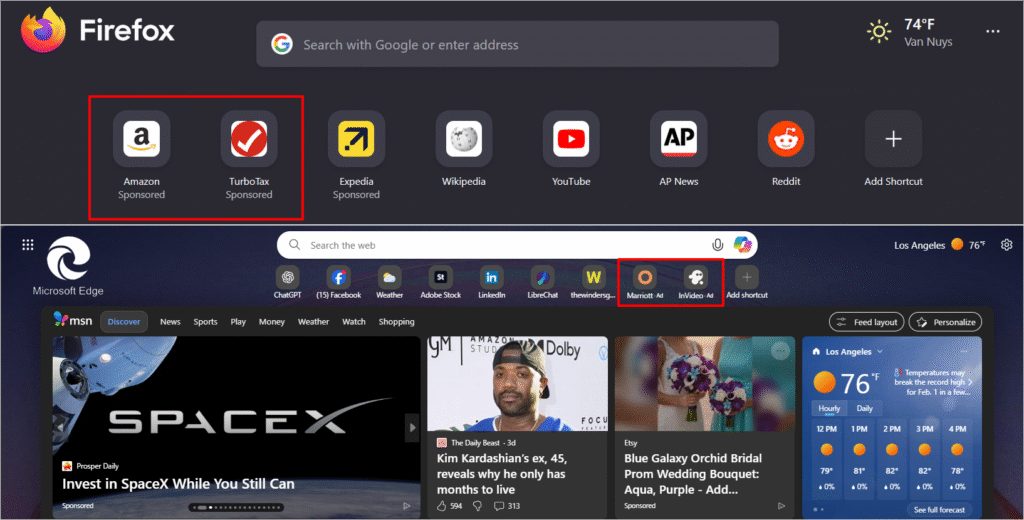
Illustrative example of sponsored shortcuts on browser opening screens.
Search Suggest: An Option as Shoppers Type
Search Suggest introduces a brand or product option as someone types within a supported interface. It meets the shopper as they express what they are looking for.
The destination matters as much as the suggestion. A product query should lead to a relevant product or category page, while the user’s search for a store may be best served by directing users to the brand’s homepage.
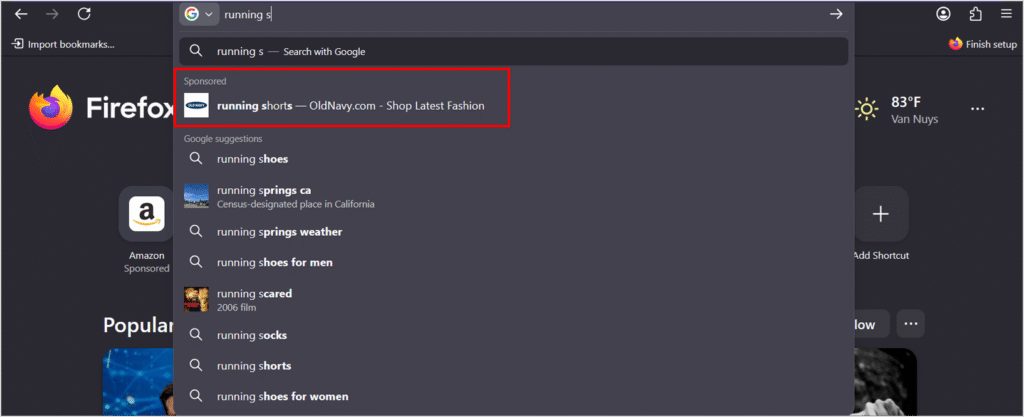
Illustrative example of a sponsored suggestion appearing as a shopper types.
Conversational AI: A Path from Question to Product
Some shopping journeys begin with a question: Which carry-on fits these airline dimensions? What product meets this need within my budget?
Conversational AI can help shoppers explore those questions. In configured partner experiences, Shopnomix connects product discovery with commerce infrastructure. The shopping actions available depend on the integration. Accurate product attributes, pricing and availability help make the path from recommendation to store useful.
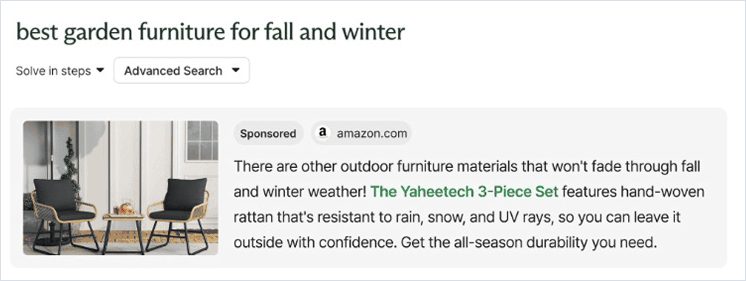
Illustrative example of a sponsored product recommendation in an AI shopping answer.
Text Links: Turning Relevant Content into Commerce
A reader exploring a product recommendation may be ready to learn more. Text Links connect eligible retailer links and relevant product or brand mentions in publisher content with commerce demand.
For brands, the opportunity sits in the relationship between the content and the shopping destination. A relevant link gives an interested reader somewhere useful to go, with a product or offer that matches the surrounding context.
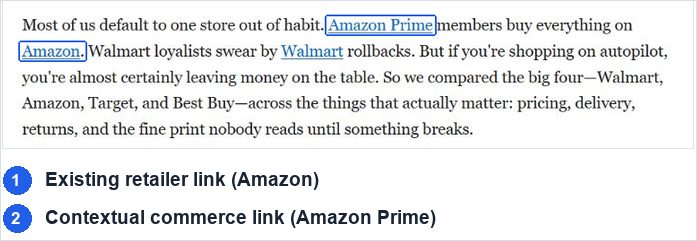
ShopperWizz article excerpt showing an existing retailer link and a contextual commerce link.
Buy Now, Pay Later: Discovery Within a Shopping Environment
Shopping and offer-discovery placements within a Buy Now, Pay Later provider’s environment give brands another setting to evaluate. Here, the opportunity is the shopping placement itself, separate from financing at checkout.
The fit depends on the actual screen, offer and destination, along with the campaign’s supported markets and product eligibility.
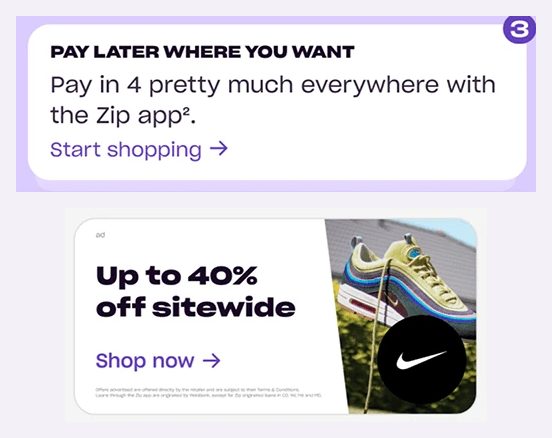
Illustrative excerpts from the Zip app showing its Pay in 4 banner and a merchant ad.
The Performance Opportunity
Integrated Search can help brands connect with shoppers at moments that a conventional search campaign may not address. A browser tile makes a store easier to reach. A suggestion responds to an emerging query. A conversation helps someone compare options. A text link offers a relevant place to continue shopping.
These opportunities can complement existing search, social and commerce activity. Their value comes from the fit between the shopper’s task, the message and the destination. A familiar store may justify a shortcut; a detailed product question calls for accurate information and a useful recommendation.
That is also why “pre-search” describes only part of the picture. It explains when a tile appears, but it says little about how ready someone is to buy. A shopper looking for a familiar store may already have a purchase in mind, while someone asking a specific product question may still be deciding.
Challenges and Readiness
A useful placement needs a useful destination.
The creative should reflect the setting, product information should be accurate and the landing page should deliver on what the shopper expects. An opportunity that introduces a product may need a different message from one that helps someone return to a store.
Measurement needs the same care.
Reported visits and conversions show activity, while assessing additional demand may require a comparison or test. Clear definitions, campaign costs, returns and overlapping channel claims help brands judge what the results mean for the business.
How to Get Started with Integrated Search
Start with a Shopper Need
Identify where the current journey could work better. Is a store difficult to find, a product hard to compare or a recommendation missing a useful next step? Choose a business objective that connects to that need.
Test a Suitable Placement
Work with Shopnomix to identify an available opportunity and agree on its audience, markets, creative, destination and reporting. Keep the initial scope focused enough to learn whether the placement serves the intended purpose.
Use the Results to Guide Expansion
Assess performance against the original objective. Look at the quality and cost of the outcomes, then decide what to refine, continue or expand. The evidence should guide the next investment.
The Net Effect
Integrated Search gives brands more ways to connect discovery with shopping. Its practical value starts with understanding the moment: what the shopper needs, how the placement helps and where it leads.
For some shoppers, that may be one tap to a familiar store. For others, it may be a better answer to a product question. Match the opportunity to the customer’s next step, then measure what it contributes.
Talk to Shopnomix about where Integrated Search could fit in your commerce plan.