Why High-Intent Commerce Needs More Than Last-Click Attribution

Jeff Segall, EVP of Revenue Operations for Shopnomix, and Todd Ulise, Global Chief Revenue Officer of Nomix Group, joined Lee-Ann Johnstone at Affiverse Media for a conversation about how performance teams can adapt as consumer intent becomes more distributed across search, social, creator content, AI surfaces, and commerce environments.
The discussion moves across last-click measurement, integrated search, high-intent supply, creator-led discovery, performance-based pricing, and the data infrastructure brands need to understand what is actually driving purchase behavior.
Watch the Webinar
Three Key Takeaways
1. Last Click Still Matters, but It Is Not Enough
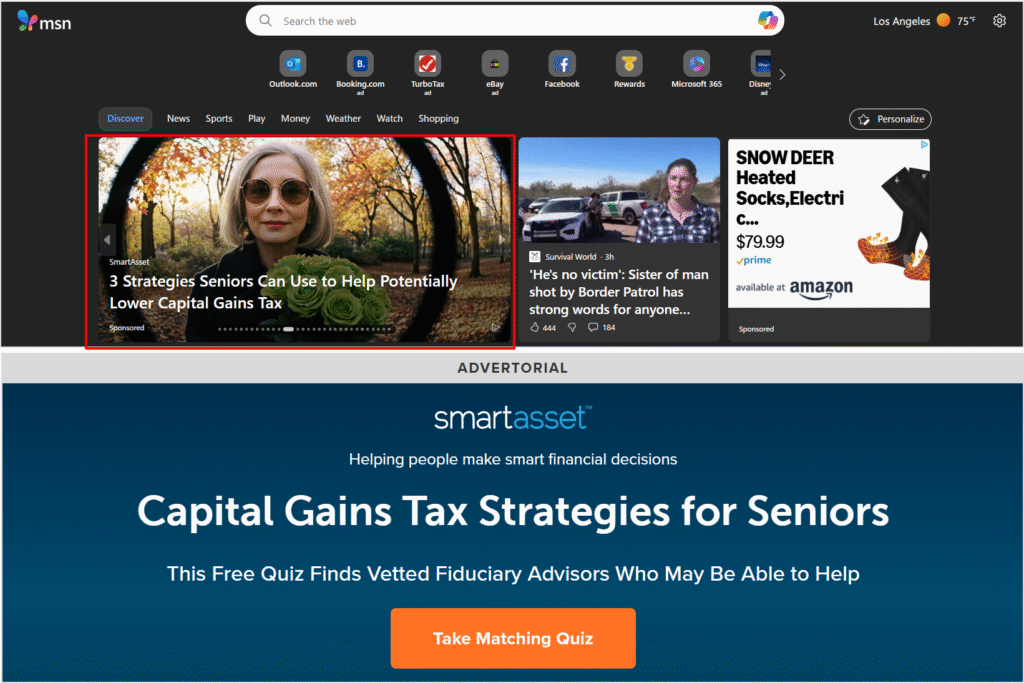
Segall and Ulise describe why last click has remained the default performance metric for so long. It is easy to understand, easy to verify, and easy for teams to defend. A shopper clicks, converts, and the channel receives credit.
But the modern commerce journey is rarely that simple. A customer may see a creator recommendation, search for more information, compare products through a browser or AI assistant, return through a commerce surface, and only then complete a purchase. When the final click gets all the credit, brands risk undervaluing the earlier moments that created the demand.
For Shopnomix, that makes measurement and attribution a more strategic conversation. Performance teams still need to know what converted, but they also need to understand which touchpoints created intent, moved the shopper forward, and helped make the transaction possible.
2. Integrated Search Expands Where Intent Can Be Found
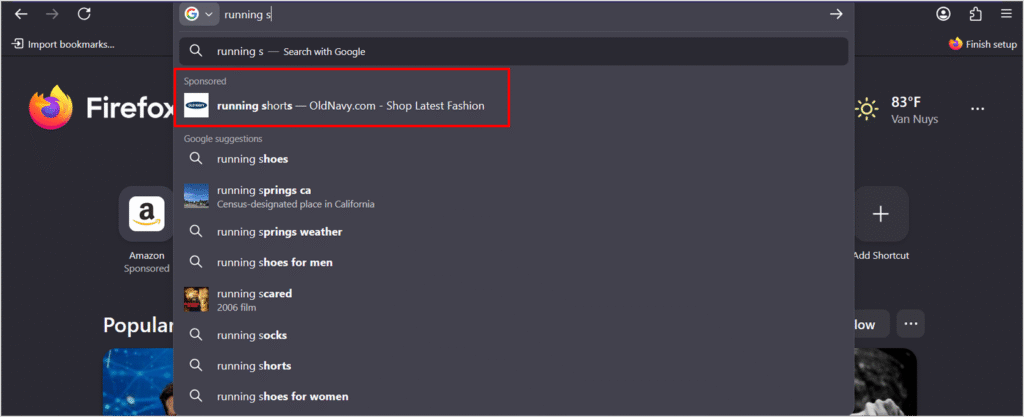
The conversation frames integrated search as a shift away from thinking about search only as a traditional results page. Search is still about intent, but the expression of intent is moving earlier and appearing in more environments.
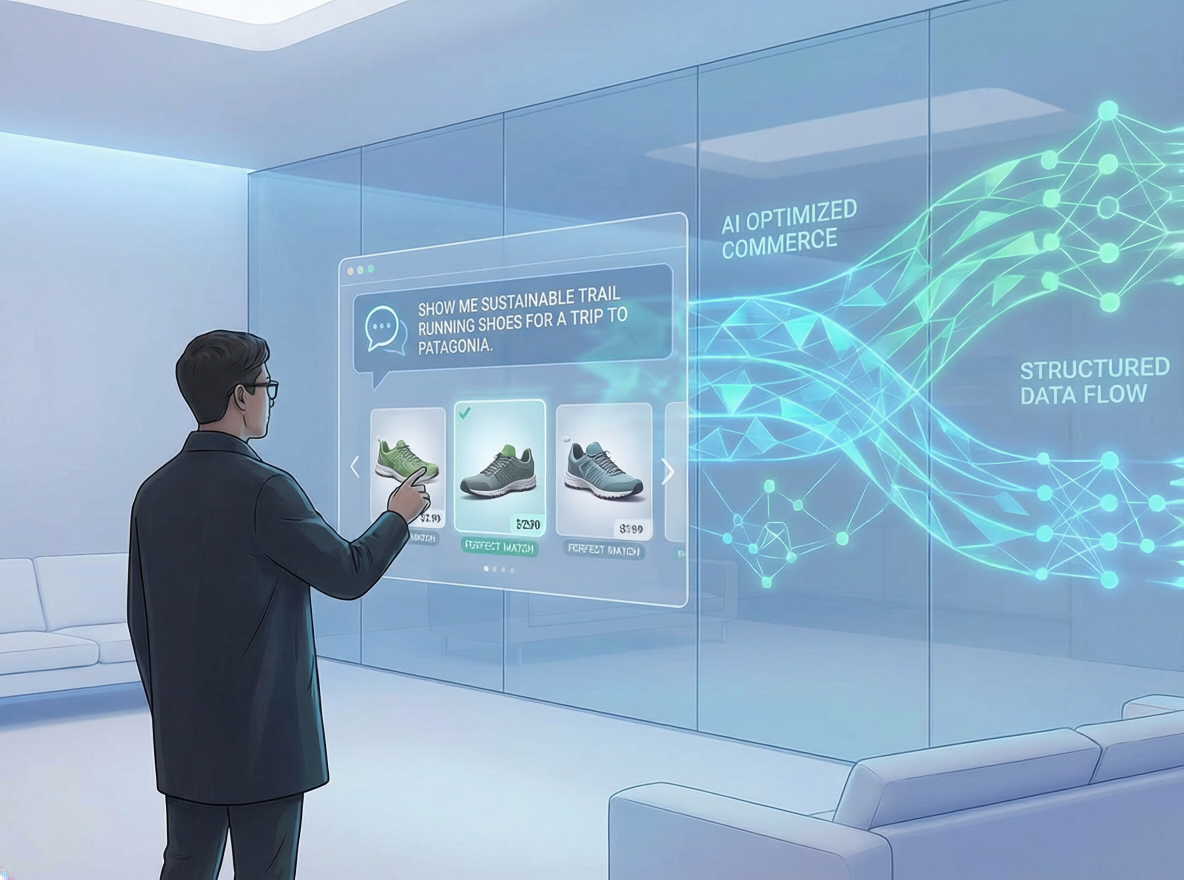
Ulise describes integrated search as intent that can be identified inside devices, browsers, AI agents, and other distributed experiences before a consumer performs a traditional search action. That changes how brands should think about high-intent traffic.
The opportunity is no longer limited to waiting for a shopper to type a query and click through a familiar page. The opportunity is to recognize active, passive, and implied intent across more surfaces, then route that shopper toward the right product, offer, or experience.
For brands, this is especially important as AI changes how people ask questions, compare products, and make purchase decisions. The signal is still there. It is just showing up in different places.
3. Performance Requires Better Data, Not More Channel Fighting
Segall points to one of the most important operational issues for brands: teams often have separate budgets, separate goals, and separate views of performance. Search, affiliate, paid media, social, and creator teams may all influence the same customer journey, but they are not always measured against the same business outcome.
That creates friction. It also makes it harder for brands to decide where to invest, how to compensate partners, and how to understand the real value of each interaction.
Shopnomix’s role is to help brands work from a more data-driven foundation. That includes understanding where intent is coming from, how traffic is performing, which supply sources are creating value, and how different commerce touchpoints should be measured.
The goal is not to force every partner, publisher, creator, or search environment into the same role. The goal is to build a clearer performance system that can value different contributions while still tying investment back to outcomes.
Why It Matters for Brands
The practical thread running through the conversation is that commerce performance is becoming more complex, but also more measurable.
Brands can no longer rely only on a simple path from query to click to purchase. They need to understand the broader journey: where the shopper discovered the product, what influenced the decision, which signals showed intent, and which partner or platform helped move the shopper closer to conversion.
That requires cleaner data, stronger reporting, and a willingness to test beyond legacy channel assumptions. It also requires a more flexible view of performance economics. CPA, CPS, revenue share, hybrid models, and other outcome-based structures can all play a role, but only when brands understand what each touchpoint is worth.
For performance teams, the message is clear: the future is not about abandoning accountability. It is about expanding accountability across the full path to purchase.
The next phase of high-intent commerce will not be won by the team that claims the last click. It will be won by the brands and partners that can identify intent earlier, measure contribution more accurately, and connect shoppers to outcomes wherever commerce happens.
Full Transcript
Transcript lightly edited for clarity, readability, and speaker attribution.
Speakers: Lee-Ann Johnstone, host; Jeff Segall, EVP of Revenue Operations for Shopnomix; Todd Ulise, Global Chief Revenue Officer of Nomix Group.
Lee-Ann Johnstone:
We have a few fabulous guests who I am really excited to get into the nitty-gritty with. To introduce yourselves, tell us a little bit about Shopnomix and Nomix Group, and then we will get into the thick of our conversation. I am going to pick Todd first because you are at the top of my screen. Welcome onto the show and tell everybody a little bit about who you are, what you do, and why you are here.
Todd Ulise:
Thank you so much, Lee-Ann. I really appreciate it. I look forward to having a great conversation today. I am Todd Ulise, Global Chief Revenue Officer of Nomix Group. I have been in digital marketing for 26 years.
I started at a company called Traffic Marketplace. We built the second-largest performance ad network in the world starting back in 2000. We ended up selling that to Vivendi Universal. We solved the problem of performance marketing and risk back in 2000.
Then I started a digital agency called IMS, promoting comedians and developing content. We vertically integrated in the comedy space because comedy marketing was underserved, and we ended up selling that business in 2011.
Then I worked for ad.net in the incremental search space for about 14 years. We realized that search needed to be syndicated. I exited that and came to Nomix Group as Global Chief Revenue Officer earlier this year. It has been a whirlwind seeing what the team is doing and helping take the business to the next level.
Lee-Ann Johnstone:
Four companies within 26 years. We have digital royalty joining us today. Since the dawn of time, you have seen it all, which is why I love having conversations with you.
Jeff Segall:
Thank you. I am Jeff Segall, EVP of Revenue Operations for Shopnomix. I have been with Shopnomix about three and a half years now, which is not too bad for a company that is only about four years old.
I have been in the industry for about 12 or 13 years across two companies. Before Shopnomix, I worked for a CPC network. My background is actually in software engineering. When I joined the industry, I came in as an engineer working on optimization algorithms, web servers, and making sure traffic was getting to the right place.
I moved from engineering into an engineering and operations hybrid, and now into revenue operations. When I tell people what I do, I say that I sit at the intersection of engineering, finance, sales, and client services. I make sure everybody has the data they need, the traffic is flowing, and the reporting is where it needs to be.
Lee-Ann Johnstone:
Two very experienced people are joining me here today, which is great because we are going to be digging into a subject where we are still on the precipice of what is changing. Nobody really understands how consumer behavior is being affected by all the new AEO and GEO platforms. SEO is being given a run for its money again since it first burst onto the scene.
Let’s set the scene. There is a massive market shift, especially in the performance space, because last click has always been the vanity metric we have been measured on. That has been blown out of the water this year as we started to see consumer behavior change. Discovery, influence, and intent are now all over the place.
There is no single funnel where people go to a website, then a review page, then maybe click on a social media link, then find a coupon, and then purchase. I want to dig into what is changing right now and help everybody joining us understand how they need to navigate this shift. For those of us who have been in the industry for a very long time, this is probably one of the most exciting big things that has happened in the last two decades. It is like the next iteration of the internet is being born, and we have front-row seats to watch it.
Todd, when you look at commerce performance today, what has changed most about where influence is actually happening? You have a lot of data in terms of how customers are purchasing online. Give us the start there.
Todd Ulise:
We will take a step back and look at where it is going. Shopnomix was founded based on the economics of shopping and the knowledge that shopping was going to shift. Through rapid growth over the last three and a half years, through acquisitions and internal development, we realized that performance at the bottom of the funnel is one piece of it, but the bigger question is how else consumers are interacting.
If you look at what has been happening in Asia, consumers have purchased through live streams for many years. The model in Europe and America is moving away from traditional last click and toward a more holistic approach.
Through acquisitions and development, Nomix Group was formed as a holding company that has Shopnomix as well as other entities, including platforms with 400,000 creators.
On last click, last click has always been easy. I have heard for 20-plus years about the death of last click. Why do we all default to it? Because it is easy and safe. You can say, my channel gets credit for this. I can verify it through Google Analytics or SA360, so I get credit, I have a job, and my channel is doing well.
As we go forward, that ecosystem is blown up. It takes leaders to come to the table and say there are different ways consumers interact. You can see an ad from a creator. You can do a live shopping ad. You might purchase after starting your journey in different places.
The world is getting more fragmented, and that is a big piece of what Nomix Group solves. It solves fragmentation through Commerce, Everywhere. We will get into how we do that through creators and integrated search. Last click is inherent by default, and it is safe, but it is not right. It is not what is going to drive this business forward.
Lee-Ann Johnstone:
Jeff, brands are still operating as if the customer journey is more linear than it really is. I was in a boardroom yesterday with a C-suite client, and we were identifying where the budget was going to come from for the performance team, because it has to come from everywhere. It is not a channel on its own anymore.
If the buyer is being influenced before they ever reach a brand site, what does that mean for affiliate and performance teams?
Jeff Segall:
It means you have to spend more time identifying what all those different touchpoints are. Last-click attribution has been the gold standard for decades because the journey has always been simple. A user types a query, is driven to a page, and makes a purchase. Or the user is on a blog, clicks a link, and makes a purchase. That provenance has always been there.
Now there are all these different touchpoints that on their own may not even have their own attribution. It is not just a problem of understanding what those touchpoints are. It is also understanding how we measure them and validate them. That is going to be a big conversation going forward.
Lee-Ann Johnstone:
The channel label is breaking down. We are seeing this already in the way clients are putting budget toward performance. They are pulling a little from PR, SEO, and paid media. They do not really budget affiliate as a channel anymore because it is integrated everywhere. It is a payment mechanism. It is paid on performance.
Todd, you mentioned everyone is fighting to own the channel. What is happening right now, and who loses?
Todd Ulise:
What we are seeing is that people are scared, just to be transparent. People are scared because they want to know which channel gets credit. Where does AI sit? Does it sit within search? Does it sit within affiliate? What about creators? Creators create content. Where does content sit? Content traditionally is thought of as articles, so there is channel overlap.
What we ultimately envision is that every channel has its own efficacy and its own performance metric. Affiliate is a payment mechanism, and I think that puts affiliate marketing, or performance marketing, in a better framework because we can track down to the most granular level. We can value each piece of media, each click, and each user based on what they perform at or what they are worth.
The conversations need to expand. Traditionally, a lot of brands and agencies tend to be siloed. Part of what Nomix Group has done with Commerce, Everywhere is bring those silos together and get them talking.
If you show that you are helping, and you have access to massive distribution, performance marketing, distribution infrastructure, and velocity on deployment for creative, then the infrastructure is there. It is about getting teams to talk and showing how these things work together. It is about negotiating from growth, not fear.
Is AI going to take money away from search? Is AI moving toward affiliate? Is creator affiliate? Is content search? At the end of the day, to a consumer, it does not matter. To a C-level brand leader, it does not really matter. It is just how you flag it, tag it, and value it.
Lee-Ann Johnstone:
Some people have that level of tracking, but some still do not. There is going to be catch-up needed on the brand side. Now that we can track these events and the things directing a consumer to purchase, we can also incentivize on economics of scale. Maybe the first touchpoint gets 5% and the last touchpoint gets 95%. I do not know what that metric is, and it is different for every client.
Jeff, what confusion are you seeing with clients who come to you with budget and say they want sales and customers, but they are not seeing the full halo effect of everything they should be tracking?
Jeff Segall:
There is still a lot of segmentation, but there is also a lot of contention between teams, as Todd mentioned. You have traditional search teams with their buckets and the things they have historically controlled. You have performance teams with the things they have historically controlled.
We see contention or fighting between teams instead of having them work together on an overall media strategy. At the end of the day, what is beneficial to the brand is making sure we can combine these things, have those teams work together, and build an overall strategy for growth.
Lee-Ann Johnstone:
How many clients are actually adopting this process? Are the bigger brands already coming to the table and adopting this new methodology, or are brands still not understanding it?
Todd Ulise:
When you introduce new concepts, people are averse to change. We have talked about this before: it is not technology problems, it is people problems. At its core, technology can solve the problems. The question is whether the human mind is ready to adapt.
When you introduce what I would not even call new things, but the right thing, it is the right way to value all pieces of media and all interaction.
Think about buying something on a discount site. How much time do you spend there? Maybe 10 seconds. But what led to that purchase? Was it reviewing? Was it watching a TikTok video from a creator? You could have spent 10 minutes reviewing and interacting with a product, but the end transaction happens on a discount site. That site gets credit.
Why did you go to the discount site? Because you wanted 20% off. Value that piece of media for what it is worth, but value the interaction that got you to that path of purchase at a higher value.
When you put it into pragmatic terms, people start to get it. But understanding and actually taking action are different. That takes time. You have to take an educational strategy and be agnostic to media.
I have always been agnostic to channels. Media performs. You have to be objective about the path to purchase. We have taken the approach of Commerce, Everywhere. It is an ongoing conversation, and the way to continue it is to be upfront with clients about what they are doing and how we can help them value what we are doing.
Lee-Ann Johnstone:
It also takes transparency, because even marrying affiliate platform data with what a client sees in their backend can be hard. Before we get into where the market is going, what did you learn from building in the affiliate ecosystem first? Jeff, I will come to you on that one.
Jeff Segall:
The biggest thing is how to operate with performance. Whether it is affiliate, search, or new channels, everything is performance. The goals may be different. The payout structures may be different. But at the end of the day, we are trying to drive sales for the brand.
A lot of the learnings are around how we track performance, how we optimize for performance, and how we have conversations with individual brands. Everybody has different goals and different metrics. We need to work with teams in the correct way, meet their goals, and help them achieve what they want to achieve.
Lee-Ann Johnstone:
That means you need to be able to provide bespoke service. It is not plug and play. You are having close relationships with clients to understand what their value metrics are, and then hit the goals they are internally measured on.
Todd, you have seen many iterations of the internet. This is scary to most people, but you seem relaxed, as if it is another ebb and flow of the internet.
Todd Ulise:
There are no really new business models, just new mousetraps. Brands want to reach consumers in the most effective manner possible, and publishers want to increase eyeballs and revenue. It is really that simple.
I got onto the internet in 2000. The dot-com bust happened, and what did that give rise to? Performance-based marketing. If you can quantify results, you can justify media.
You can see trends. One benefit we have on the Shopnomix side is looking at a lot of data. Consumer behavior shifts after events. After 9/11, travel died. After the pandemic, in-store retail died, but other things rose. You can see where dollars shift. Query data and volume data show what people are buying.
There are cycles. Weekend traffic and performance change because people are out with their families. You see pizza spikes during the Super Bowl and flower spikes on certain days. It is not uncommon. You have to look at it in perspective.
Even in 2008 and 2009, when the economy was down, it gave rise to other categories. People went back to school, so education rose. Finance and refinance lead generation rose. Overall media dollars shift into different channels. The key is anticipating the shift.
Now channels are investing in AI. The question is who gets credit for those channels and where those dollars are being pulled from. People are struggling with that.
AI also allows content and inventory to scale at a lower cost. If a CMO has a $20 million budget and content costs decrease, they are not giving $5 million back. Those dollars will go more into media. More inventory gives rise to more performance marketing.
The infrastructure built through affiliate and performance marketing allows the payment and deployment infrastructure to extend to the rest of the media channels. That is why I think the affiliate business is in a good position to capitalize. It is my mission to uplevel affiliate and call it performance marketing, because all channels eventually move toward a rate-rules model. If we continue to uplevel affiliate and use the best parts of it, more dollars can be directed toward the affiliate world and pulled from traditional media that does not perform.
Lee-Ann Johnstone:
That is reassuring. A lot of people are wondering how to justify their jobs, and you have justified it right there. The more efficient we get and the more we understand where to spend our money wisely, the bigger performance marketing becomes.
I am going to quickly ask some audience questions. The first question is from LinkedIn: can smaller ecommerce stores affordably use your solutions too? Are you working only with big brands, or with any retailer that wants to reach customers across the channels Nomix Group works in?
Todd Ulise:
Absolutely. It ultimately comes down to volume. The system is set up so that we ensure performance for all partners, because if you do not ensure performance, you do not get renewals.
The fundamental pillars are distribution infrastructure, creative velocity, and performance economics. The challenge is always volume. Any media ecosystem has a bell curve. If there is low volume, you will get low volume everywhere. The short answer is yes, of course we can. But we have to be mindful of volume.
Jeff heads rev ops for the company, and it is about looking at the data and the goals. Sometimes the way to get more inventory is to have looser goals so you can capture more market share.
Lee-Ann Johnstone:
Another question: what creates the bigger constraint to growth today, technology limitations or organizational resistance to change? Jeff, maybe you can take this one.
Jeff Segall:
It is probably a little bit of both, but I would lean more toward organizational resistance. The engineer in me will say we can always build technology to solve whatever problem we are trying to solve. There is a conversation around the best way to do it.
It is not necessarily just a conversation between Shopnomix and a brand. It is a general industry conversation: how do we, as an industry, better figure out what the technology looks like to solve this problem? That is a solvable problem. It is more about getting everybody together to find the solution, and then working together as an industry to build it.
Lee-Ann Johnstone:
Let’s get into the Shopnomix model. How does it look different from conventional affiliate or paid search execution? Jeff, explain.
Jeff Segall:
Like Todd said, the model of Nomix Group is Commerce, Everywhere. The difference between what we do and traditional models is building an overall media strategy. It is all individual touchpoints that come from a lot of different places.
On the Shopnomix side, we work with what we like to call hard-to-access, high-intent supply. It is identifying user intent at the exact right moment and getting the user to where they need to go.
That can be a combination of search, social, creator, AI, and more. The difference is being able to merge all those things and bring a unified plan to the brands we work with.
Lee-Ann Johnstone:
Todd, when you say integrated search, what do you mean beyond the traditional search results page? A lot of people do not understand what search means anymore. It is everything, everywhere, all at once.
Todd Ulise:
People often focus on the execution of search. They think of the search results page. But when you peel back the onion, you have to look at the meaning and motivation behind what someone is trying to do. It is really intent.
Intent is often mistaken for the execution of intent. Traditionally, execution meant typing something into a search box and seeing a page of results. As we move forward in an AI world, search is becoming more integrated.
We have codified the term integrated search, and we are seeing strong receptivity from people who understand and want to get involved. What it truly means is that you are integrated within the device, within the browser, and within AI agents. It is literally in the name.
You are establishing intent before the user does a physical interaction. You are native to AI agents. You are not going to a website, typing something in, and seeing a search ad. I would call that latent search versus integrated search. Intent is moving upstream.
Search has not changed much in 20-plus years. Now it has moved upstream into devices, AI browsers, and other integrated environments. That changes the fundamentals, including ad copy, keywords, and content.
You can broadly define search as anything that establishes intent, whether active intent, passive intent, or implied intent. That creates more openness around where search is going.
Query volume is decreasing because of AI, and that will continue. The dollars are not going away. They are shifting. We have the organizational ability to capture those dollars where they are moving at scale.
Lee-Ann Johnstone:
That is why there has been a fundamental shift in affiliate programs. You cannot just invest in SEO, PPC, and content-related affiliates anymore. You have social media affiliates selling direct from feeds, integrated environments, closed communities, and all kinds of places where intent is happening.
Now I want to talk about creators and content. Usually they sit in a different budget area under social media, but now they are moving into performance and affiliate. Operationally, what needs to change? Jeff, when creator-led discovery is treated as part of the performance system, what do clients need to change?
Jeff Segall:
At the end of the day, it comes back to attribution and credit. If I am a creator making content and sparking the beginning of the journey, how do I make sure I get credit for that process? How do I make sure I get the revenue back that I need to continue making content, promoting products, and making recommendations?
Between the creator side and the brand side, it is about making sure there are defined mechanisms for keeping that attribution alive and making sure we have the data to track the user journey.
Lee-Ann Johnstone:
How do brands avoid forcing creators and traditional affiliates into the same roles while still measuring them against shared business outcomes?
Todd Ulise:
You have to have conversations. Creators create content. Ultimately, it comes down to how brands look at payouts, and it comes back to channel fighting and attribution.
To Jeff’s point, it is about making sure people are paid what they are worth. The creator economy is drastically underpaid for the value it creates. If you look at how much time and attention are spent on creators versus other media, and where the dollars are flowing, there is a gap.
It takes time because it means shifting money. It takes a CMO or VP of marketing who is agnostic to channels and not focused on which team is fighting for which credit. In an ideal world, we will be objective about all media, and I think we are getting there.
The world has become more fragmented. People may start with a question in an AI chatbot and then interact somewhere else. There are more options and channels to buy. That is why having a company like Nomix Group, with distribution infrastructure across channels, matters. Many companies solve one piece, whether that is channels, performance, or creative velocity. We can solve and activate across all these channels in real time.
One of the things we have done is our AI content studio, Fanomix, which is where we see a lot of uptake. It allows dollars to be reinvested into performance marketing if you can decrease content production costs.
Lee-Ann Johnstone:
You are giving everyone who tunes into this webinar some free credits for Fanomix to check it out. Tell everyone a little bit about what Fanomix is and does.
Todd Ulise:
Fanomix is our AI-driven content studio. We spent years developing it and did a hard launch a few months ago. The common complaints about AI-driven content are that the quality is not good or that AI content will take jobs. We do not think that is true.
If you are a creator, how much content can you produce yourself per day? Maybe a couple of videos. What if we can take that up 20 times? You have more volume, which means more ad opportunities.
From a brand perspective, say the total brand budget is $20 million and 30% of that goes toward commercials, paying people, and production. That is $6 million. If the head of marketing can take that cost down significantly, they have more money to invest into media to get more customers.
That is where AI fits into performance marketing. It creates cost savings for brands, amplification for customers, and content performance that can be deployed at scale and tracked in real time.
We want people to test Fanomix. We have invested significantly in it. We think the future of AI is sight, sound, and motion. The fear that AI will take creative jobs misses the point. You cannot outsource storytelling. You still need the right person, the right consumer, and the right demographic. The execution cost goes down, which allows more dollars to flow into performance marketing.
Lee-Ann Johnstone:
There is also an integrated search ebook that people can download after watching this webinar. With all this, the thing that stands out is that if I get more data, more transparency, and can influence the customer across more channels, I also need to rethink how I pay.
For years, we have been pigeonholed into CPA, revenue share, hybrid models, or fixed fees. Now we can talk about outcome-based economics. What needs to be true operationally before a brand can confidently shift spend? Jeff, I think this one is for you.
Jeff Segall:
It is all part of the ongoing conversation. What are each of these channels worth, and what should the pay structure look like?
One of the nice things about CPA, CPS, or revenue share is that it is the purest form of payment. You are paying for performance. It is the ultimate de-risker because you pay when the sale is generated. From that perspective, companies love CPA because it de-risks the budget.
After that, it becomes a continuing conversation. We have all these touchpoints. What is each one worth? Historically, if someone is working on a CPA, everything gets bucketed the same. But performance is not always the same. The journey is not always the same. It is part of an ongoing partnership to identify what something is worth, how it fits into the overall strategy, and how to pay out on it.
Lee-Ann Johnstone:
Now brands have the choice. Before, everything was benchmarked against last click, and the user journey was A, B, C. Now the user journey can be many different combinations. Who gets the reward for all that intent, and where is the intent coming from? The channel is now basically irrelevant. It matters who pushed the customer further down the funnel.
We are talking about the possibilities of what the future of performance could look like and how people need to think beyond the status quo of the last 25 years.
What do brands and publishers need to do now? If a brand wants to modernize its commerce performance strategy, where should they start in the next 90 days?
Todd Ulise:
First, they need to talk to Nomix Group.
They also need to understand that the media ecosystem is changing and have honest conversations with themselves. If citations get monetized, people will monetize all places. Think of a canvas where you place things in front of people. The canvases have shifted from television to devices, and to smaller and smaller devices. The canvases will continue to shift.
Brands need to understand that shift and make sure tracking is in place so they can value the user. As Jeff said, it is about making sure tracking is set up and the user is valued.
Brands need to look in the mirror and say, let’s stop fighting over channel. What are we trying to do? How much are we trying to value it?
When I ran media and publishing teams earlier in my career, I always said to perform 10 or 15 percent better. That gives you 10 percent to invest in exploratory channels, to tie things together and get learnings instead of saying you have to hit one goal by one date and pull money from elsewhere.
Brands should have open and honest conversations. Publishers need to continue growing eyeballs because they are losing them upfront. The publishing world is hurting. Part of the value of Shopnomix is helping publishers by bringing our portfolio of demand, new products, and revenue monetization solutions at scale, with white-glove service.
Lee-Ann Johnstone:
Jeff, from your perspective, what are the top tips for the next 90 days?
Jeff Segall:
The name of the game is data-driven decisions. If I am a brand working on my strategy over the next 90 days, the biggest things are making sure we have the conversations, understand what the strategy might look like, and just as importantly, make sure the infrastructure is in place to measure all of it.
Without measurement, you are flying blind. You need to understand the process, understand what the infrastructure looks like, and make sure tracking and reporting are set up so you can evaluate everything that comes in.
Lee-Ann Johnstone:
Is this something your account management team can advise people on? If they come to you and say they want their products everywhere all at once, you help them plan that out?
Jeff Segall:
Yes, absolutely. With any relationship we have, we want it to be a partnership. We work with you to identify your goals, what the strategy should be, and how to achieve those goals in the right way.
Lee-Ann Johnstone:
What is the conversation the industry needs to be having? It is fine for brands to come and talk to you, but as an industry, what should we be discussing?
Todd Ulise:
The conversation the industry needs to have is getting away from affiliate as only transaction. Transaction is the bare bones of any relationship. Jeff hit the nail on the head: it is partnership.
This is part of upleveling affiliate from transaction to partnership. When you have true partnerships, you can create transformational change. It becomes less about whether you hit a single goal and more about how you are helping the brand grow.
A lot of companies in affiliate are smaller companies, and that is fine. You can have a transaction where you sell two products a day. But if you are selling 20 million products a day, that is exciting.
We see brands focusing on bigger players because there is a lot of media noise. That is what puts Nomix Group in a good position. We have built distribution scale and can activate across services.
It is not just saying we can sell a product and get $5. It is saying, here is access to the channels we have, here is what each is worth, and here is the conversation we need to have.
I encourage the team to have as many calls and conversations as possible instead of just back-and-forth emails. We need to uplevel affiliate into performance marketing and give the industry a guidebook for how to do it. It is about moving from transactional to partnership, and then to transformational.
Lee-Ann Johnstone:
We are on the precipice of change. The way advertisers and brands run marketing teams now has to adjust. You get a head of affiliate, head of performance, head of paid, head of social, but now it is all marketing because everything is integrated, and performance is going to win because everyone wants to pay after the fact and not before.
We could see a massive shift in this industry if we get the data and can commercialize the pieces we value. For one brand, the most valuable customer may be a repeat purchaser. For another, it may be a net-new customer. We are getting to the point where we can pay for those things.
It has been incredibly interesting talking to you about what is happening in the space. I want to thank the people who asked questions because we love to interact with you during these sessions.
We will link everything for you, including the Fanomix free credits so you can create some content. We will also link the integrated search ebook so you can educate yourself on what is changing and what you need to look at.
Remember the rules of the game: check your data, have conversations with people who can help you, think about what you want to build your partnerships around, and keep learning. None of us can foretell the future. We are all living it as we go. Do not be afraid. Be flexible, and keep listening to experienced people who can help show the way forward.
Thank you both for being on this webinar with me today. It was a real pleasure to dig into both of your experiences and see what Shopnomix is seeing and what Nomix Group is building. Super exciting.
Todd Ulise:
Thank you so much.
Jeff Segall:
Likewise. Thank you, Lee-Ann.